
Original text
जय शीतला माता, मैया जय शीतला माता । आदि ज्योति महारानी, सब फल की दाता ॥ ॐ जय शीतला माता ॥ रतन सिंहासन शोभित, श्वेत छत्र भाता । ऋद्धि-सिद्धि चँवर ढुलावें, जगमग छवि छाता ॥ ॐ जय शीतला माता ॥ विष्णु सेवत ठाढ़े, सेवें शिव धाता । वेद पुराण वरणत, पार नहीं पाता ॥ ॐ जय शीतला माता ॥ इन्द्र मृदङ्ग बजावत, चन्द्र वीणा हाथा । सूरज ताल बजावै, नारद मुनि गाता ॥ ॐ जय शीतला माता ॥ घण्टा शङ्ख शहनाई, बाजै मन भाता । करै भक्तजन आरती, लखि लखि हर्षाता ॥ ॐ जय शीतला माता ॥ ब्रह्म रूप वरदानी, तुही तीन काल ज्ञाता । भक्तन को सुख देती, मातु पिता भ्राता ॥ ॐ जय शीतला माता ॥ जो जन ध्यान लगावे, प्रेम शक्ति पाता । सकल मनोरथ पावे, भवनिधि तर जाता ॥ ॐ जय शीतला माता ॥ रोगों से जो पीड़ित कोई, शरण तेरी आता । कोढ़ी पावे निर्मल काया, अन्ध नेत्र पाता ॥ ॐ जय शीतला माता ॥ बांझ पुत्र को पावे, दारिद्र कट जाता । ताको भजै जो नाहीं, सिर धुनि पछताता ॥ ॐ जय शीतला माता ॥ शीतल करती जननी, तू ही है जग त्राता । उत्पत्ति व्याधि बिनाशन, तू सब की घाता ॥ ॐ जय शीतला माता ॥ दास विचित्र कर जोड़े, सुन मेरी माता । भक्ति आपनी दीजै, और न कुछ भाता ॥ जय शीतला माता, मैया जय शीतला माता । आदि ज्योति महारानी, सब फल की दाता ॥ ॐ जय शीतला माता ॥
Transliteration
Jai Sheetala Mata, Maiya Jai Sheetala Mata. Aadi Jyoti Maharani, Sab Phal Ki Data. Om Jai Sheetala Mata. Ratan Singhasan Shobhit, Shvet Chhatra Bhata. Riddhi-Siddhi Chanvar Dhulaven, Jagmag Chhavi Chhata. Om Jai Sheetala Mata. Vishnu Sevat Thadhe, Seven Shiv Dhata. Ved Puran Varnat, Paar Nahin Pata. Om Jai Sheetala Mata. Indra Mridang Bajavat, Chandra Veena Haatha. Sooraj Taal Bajavai, Narad Muni Gaata. Om Jai Sheetala Mata. Ghanta Shankh Shahnai, Baajai Man Bhata. Karai Bhaktajan Aarti, Lakhi Lakhi Harshata. Om Jai Sheetala Mata. Brahma Roop Vardani, Tuhi Teen Kaal Gyata. Bhaktan Ko Sukh Deti, Maatu Pita Bhrata. Om Jai Sheetala Mata. Jo Jan Dhyan Lagave, Prem Shakti Pata. Sakal Manorath Pave, Bhavnidhi Tar Jaata. Om Jai Sheetala Mata. Rogon Se Jo Peedit Koi, Sharan Teri Aata. Kodhi Pave Nirmal Kaya, Andh Netra Pata. Om Jai Sheetala Mata. Baanjh Putra Ko Pave, Daridra Kat Jaata. Tako Bhajai Jo Naahin, Sir Dhuni Pachhtata. Om Jai Sheetala Mata. Sheetal Karti Janani, Tu Hi Hai Jag Trata. Utpatti Vyadhi Binashan, Tu Sab Ki Ghata. Om Jai Sheetala Mata. Das Vichitra Kar Jode, Sun Meri Mata. Bhakti Aapni Deejai, Aur Na Kuchh Bhata. Jai Sheetala Mata, Maiya Jai Sheetala Mata. Aadi Jyoti Maharani, Sab Phal Ki Data. Om Jai Sheetala Mata.
The goddess who cools
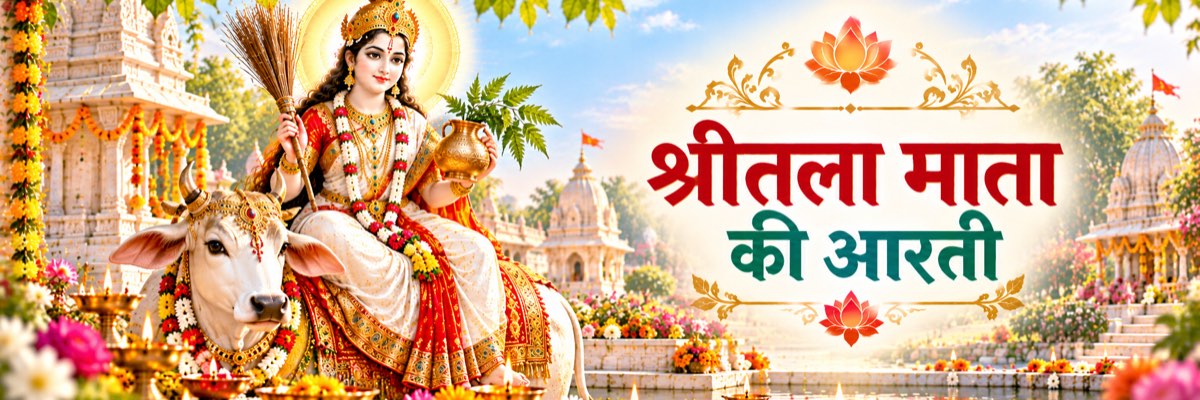
Sheetala means "the cool one". She is the goddess of north and west India who is called on against fevers and the eruptive diseases once grouped together as mata — smallpox above all, and also measles and chickenpox. Her traditional image, described in the Sheetalashtak attributed to the Skanda Purana, rides a donkey and holds a broom and a pot of water, with neem leaves close at hand: tools of cleaning and cooling. This aarti, which carries the signature of a devotee named Vichitra, is the one most commonly sung at her shrines and on her festival.
What the aarti says
- Her court. She sits on a jewelled throne under a white parasol, with Riddhi and Siddhi waving the chamara. Vishnu stands in attendance, Shiva and Brahma serve her, and the Vedas and Puranas cannot reach the end of her glory.
- The heavenly orchestra. Indra plays the mridang, the Moon the veena, the Sun keeps the rhythm, and Narada sings — while bells, conches and shehnai sound on earth and devotees delight in her sight.
- Who she is. She is a form of Brahman, the giver of boons, knower of past, present and future, and to her devotees mother, father and brother at once.
- What she heals. The aarti is unusually direct: those who come to her suffering from disease are healed — the leper's body becomes clean, the blind regain sight, the childless are blessed with children, and poverty is cut away.
- The cooling Mother. She cools, she protects the world, she destroys disease at its source.
- The poet's prayer. "Vichitra, your servant, stands with folded hands: give me devotion to you; nothing else pleases me."
Sheetala Ashtami and Basoda
Sheetala's festival falls on Chaitra Krishna Ashtami, eight days after Holi; many families, especially in Rajasthan and Gujarat, keep it on the Saptami instead. Its central rule follows from her name: no fire is lit in the kitchen that day. Food is cooked the evening before — puri, sweet rice, curd preparations — and eaten cold, after first being offered to the goddess. This is why the day is called Basoda (from basi, "stale" or "kept overnight"). The morning puja ends with this aarti, and the cold food then becomes the family's prasad.
How to perform it
- Worship early, before sunrise if possible, with cool water, curd, roli, turmeric and the food cooked the previous day.
- Use a ghee lamp for the aarti but keep the kitchen fire out for the rest of the day.
- Many families also recite the Sheetala Chalisa or hear the Sheetala Ashtami katha before the aarti.
Frequently asked questions
When is Sheetala Ashtami?
On the Ashtami of Chaitra Krishna Paksha, about a week after Holi (March–April). Some regions observe Sheetala Saptami the day before, and some also worship her on the Ashtami of other months.
Why is stale food offered to Sheetala Mata?
She is the cooling goddess, so no fire is lit on her day. Food cooked the previous evening is offered and eaten cold — this is the meaning of "Basoda".
Who wrote "Jai Sheetala Mata"?
The last stanza names a devotee called Vichitra ("Das Vichitra kar jode"). Nothing more is recorded about the poet in the sources we checked.
Is Sheetala Mata worshipped for smallpox?
Historically, yes — she was the protector against smallpox and similar fevers. Today she is worshipped for the health of children and family, and for relief from fevers and skin diseases.
Can the aarti be sung on other days?
Yes. It is sung at her temples daily, and at home whenever someone in the family is unwell or has recovered.
What is the significance of the donkey and broom?
The donkey is her mount; the broom and water pot are tools of cleansing and cooling — the Sheetalashtak describes her holding them. Together they show her as the goddess who clears illness away.
Spotted a mistake?
If you find any grammatical, Hindi, English, mantra-text or other mistake on this page, tell us — we will correct it within 24 hours.