
Original text
जय सन्तोषी माता, मैया जय सन्तोषी माता । अपने सेवक जन की, सुख सम्पति दाता ॥ जय सन्तोषी माता, मैया जय सन्तोषी माता ॥ सुन्दर चीर सुनहरी, मां धारण कीन्हो । हीरा पन्ना दमके, तन श्रृंगार लीन्हो ॥ जय सन्तोषी माता, मैया जय सन्तोषी माता ॥ गेरू लाल छटा छबि, बदन कमल सोहे । मंद हंसत करुणामयी, त्रिभुवन जन मोहे ॥ जय सन्तोषी माता, मैया जय सन्तोषी माता ॥ स्वर्ण सिंहासन बैठी, चंवर दुरे प्यारे । धूप, दीप, मधु, मेवा, भोज धरे न्यारे ॥ जय सन्तोषी माता, मैया जय सन्तोषी माता ॥ गुड़ अरु चना परम प्रिय, तामें संतोष कियो । संतोषी कहलाई, भक्तन वैभव दियो ॥ जय सन्तोषी माता, मैया जय सन्तोषी माता ॥ शुक्रवार प्रिय मानत, आज दिवस सोही । भक्त मंडली छाई, कथा सुनत मोही ॥ जय सन्तोषी माता, मैया जय सन्तोषी माता ॥ मंदिर जग मग ज्योति, मंगल ध्वनि छाई । विनय करें हम सेवक, चरनन सिर नाई ॥ जय सन्तोषी माता, मैया जय सन्तोषी माता ॥ भक्ति भावमय पूजा, अंगीकृत कीजै । जो मन बसे हमारे, इच्छित फल दीजै ॥ जय सन्तोषी माता, मैया जय सन्तोषी माता ॥ दुखी दारिद्री रोगी, संकट मुक्त किए । बहु धन धान्य भरे घर, सुख सौभाग्य दिए ॥ जय सन्तोषी माता, मैया जय सन्तोषी माता ॥ ध्यान धरे जो तेरा, वांछित फल पायो । पूजा कथा श्रवण कर, घर आनन्द आयो ॥ जय सन्तोषी माता, मैया जय सन्तोषी माता ॥ चरण गहे की लज्जा, रखियो जगदम्बे । संकट तू ही निवारे, दयामयी अम्बे ॥ जय सन्तोषी माता, मैया जय सन्तोषी माता ॥ सन्तोषी माता की आरती, जो कोई जन गावे । रिद्धि सिद्धि सुख सम्पति, जी भर के पावे ॥ जय सन्तोषी माता, मैया जय सन्तोषी माता । अपने सेवक जन की, सुख सम्पति दाता ॥
Transliteration
Jai Santoshi Mata, Maiya Jai Santoshi Mata. Apne Sevak Jan Ki, Sukh Sampati Data. Sundar Cheer Sunahri, Maa Dharan Kinho. Heera Panna Damke, Tan Shringar Linho. (Refrain) Geru Laal Chhata Chhabi, Badan Kamal Sohe. Mand Hansat Karunamayi, Tribhuvan Jan Mohe. (Refrain) Swarn Singhasan Baithi, Chanvar Dure Pyare. Dhoop, Deep, Madhu, Meva, Bhoj Dhare Nyare. (Refrain) Gud Aru Chana Param Priy, Tamen Santosh Kiyo. Santoshi Kahlai, Bhaktan Vaibhav Diyo. (Refrain) Shukravar Priy Manat, Aaj Divas Sohi. Bhakt Mandali Chhai, Katha Sunat Mohi. (Refrain) Mandir Jag Mag Jyoti, Mangal Dhvani Chhai. Vinay Karen Ham Sevak, Charanan Sir Nai. (Refrain) Bhakti Bhavmay Pooja, Angikrit Kijai. Jo Man Base Hamare, Ichchhit Phal Dijai. (Refrain) Dukhi Daridri Rogi, Sankat Mukt Kiye. Bahu Dhan Dhanya Bhare Ghar, Sukh Saubhagya Diye. (Refrain) Dhyan Dhare Jo Tera, Vanchhit Phal Payo. Pooja Katha Shravan Kar, Ghar Anand Aayo. (Refrain) Charan Gahe Ki Lajja, Rakhiyo Jagdambe. Sankat Tu Hi Nivare, Dayamayi Ambe. (Refrain) Santoshi Mata Ki Aarti, Jo Koi Jan Gave. Riddhi Siddhi Sukh Sampati, Ji Bhar Ke Pave. (Refrain)
The name explained in one stanza
Most aartis praise. This one also explains. The fifth stanza tells you where the goddess's name comes from: gud aru chana param priy, tamen santosh kiyo; Santoshi kahlai, "jaggery and chickpeas are most dear to her; in them she found contentment, and so she is called Santoshi." The goddess of contentment is content with the simplest offering there is, and that is the heart of her worship. The Friday vrat asks for no expensive puja, only jaggery, roasted gram, a lamp, the katha, and a mind that asks for enough.
How she is pictured
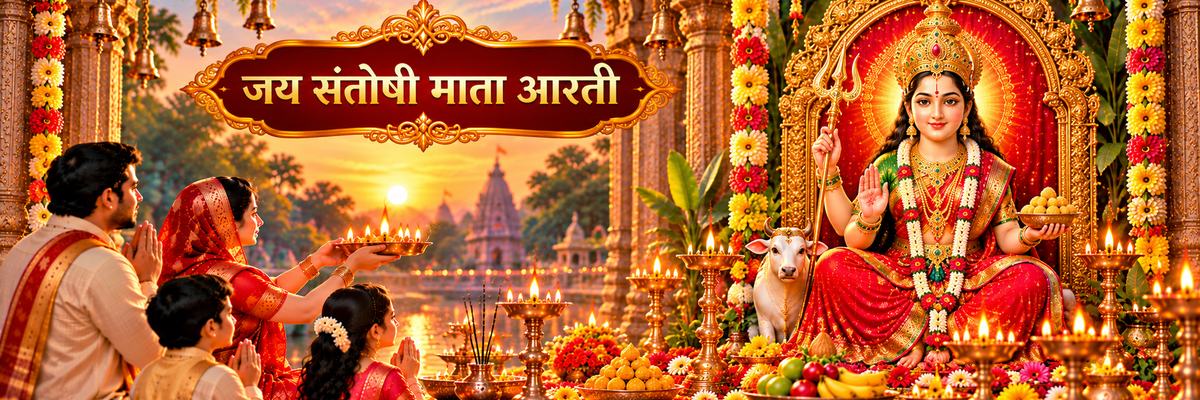
The early stanzas paint the image found in calendar pictures and small shrines. She wears a beautiful golden robe, with diamonds and emeralds shining on her body. Her complexion glows with the red of geru (red ochre), her face is like a lotus, and her gentle, compassionate smile charms the three worlds. She sits on a golden throne while a whisk is waved over her, with incense, lamp, honey and dry fruits set before her. The poem moves from her appearance to her worshippers: on Friday, her favourite day, the circle of devotees gathers to hear her katha, the temple glitters with lamps, and the sound of auspicious singing fills the air.
A plain request
The later stanzas are a simple petition. Bhakti bhavmay pooja angikrit kijai, "accept this worship made of devotion", and grant the wish that lives in our hearts. It reminds her that she has freed the sorrowful, the poor and the sick from trouble and filled homes with grain and good fortune. Then comes the line that sums up the aarti's tone: charan gahe ki lajja rakhiyo Jagdambe, "keep the honour of one who has clasped your feet, Jagadamba." The last stanza promises riddhi, siddhi, happiness and wealth "to the heart's content" to whoever sings it.
Where it fits in the Friday vrat
The Santoshi Mata vrat follows a fixed order. Bathe and set up her picture or a kalash, offer jaggery and roasted chickpeas, read the Santoshi Mata katha, read or sing the chalisa, and end with this aarti, waving the lamp before her. The jaggery and chickpeas are then shared as prasad. The one firm rule is that nothing sour is eaten, cooked or served in the house that day, and devotees take care that the prasad is not given to anyone who has eaten something sour. Many keep sixteen Fridays and finish with an udyapan, feeding eight boys a meal without anything sour.
The aarti's popularity grew with the 1975 film Jai Santoshi Maa, which brought the vrat to households across India. The film's best-known song is a different aarti, "Main to aarti utaru re". This one is the shorter household aarti in the style of Om Jai Jagdish Hare, sung at the end of the vrat.
Spotted a mistake?
If you find any grammatical, Hindi, English, mantra-text or other mistake on this page, tell us — we will correct it within 24 hours.