
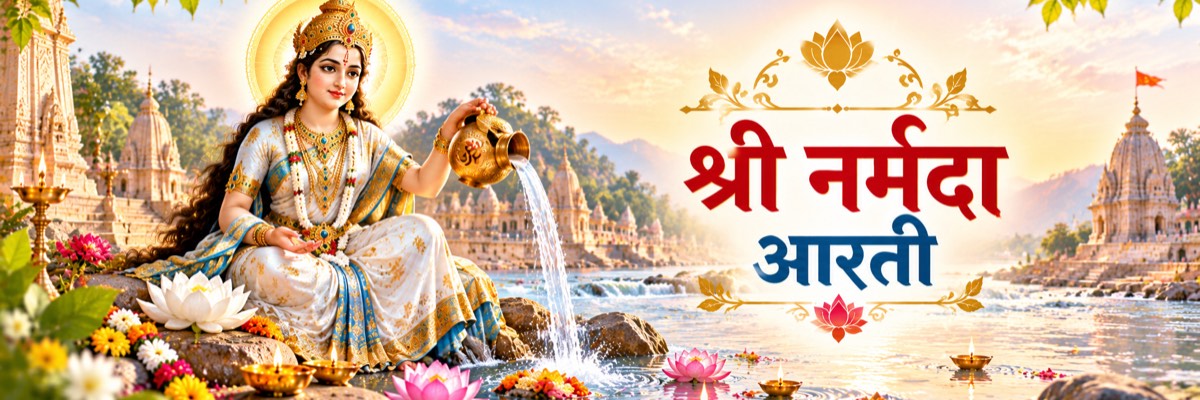
Original text
जय जगदानन्दी, मैया जय जगदानन्दी। जय जगदानन्दी, मैया जय जगदानन्दी। ब्रह्मा हरिहर शंकर, रेवा शिव हरिशंकर, रुद्री पालन्ती। ॐ जय जगदानन्दी।। जय जगदानन्दी, मैया जय जगदानन्दी।। नारद शारद तुम वरदायक, अभिनव पद चण्डी। हो मैया अभिनव पद चण्डी। सुर नर मुनि जन सेवत, सुर नर मुनि जन सेवत। शारद पद वन्दी। ॐ जय जगदानन्दी।। जय जगदानन्दी, मैया जय जगदानन्दी।। धूम्रक वाहन राजत, वीणा वादन्ती। हो मैया वीणा वादन्ती। झुमकत-झनकत-झननन, झुमकत-झनकत-झननन रमती राजन्ती। ॐ जय जगदानन्दी।। जय जगदानन्दी, मैया जय जगदानन्दी।। बाजत ताल मृदंगा, सुर मण्डल रमती। हो मैया सुर मण्डल रमती। तुडितान- तुडितान- तुडितान, तुरडड तुरडड तुरडड रमती सुरवन्ती। ॐ जय जगदानन्दी।। जय जगदानन्दी, मैया जय जगदानन्दी।। सकल भुवन पर आप विराजत, निशदिन आनन्दी। हो मैया निशदिन आनन्दी। गावत गंगा शंकर, सेवत रेवा शंकर तुम भव भय हंती। ॐ जय जगदानन्दी।। जय जगदानन्दी, मैया जय जगदानन्दी।। कंचन थाल विराजत, अगर कपूर बाती। हो मैया अगर कपूर बाती। अमरकंटक में राजत, घाट घाट में राजत कोटि रतन ज्योति। ॐ जय जगदानन्दी।। जय जगदानन्दी, मैया जय जगदानन्दी।। मैयाजी की आरती निशदिन जो गावे, हो रेवा जुग-जुग जो गावे, भजत शिवानन्द स्वामी जपत हरिहर स्वामी, मनवांछित पावे। ॐ जय जगदानन्दी।। मैया जय जगदानन्दी।। जय जगदानन्दी, मैया जय जगदानन्दी।।
Transliteration
Jai Jagadanandi, Maiya Jai Jagadanandi. Jai Jagadanandi, Maiya Jai Jagadanandi. Brahma Harihar Shankar, Reva Shiv Harishankar, Rudri Palanti. Om Jai Jagadanandi. Jai Jagadanandi, Maiya Jai Jagadanandi. Narad Sharad Tum Varadayak, Abhinav Pad Chandi. Ho Maiya Abhinav Pad Chandi. Sur Nar Muni Jan Sevat, Sur Nar Muni Jan Sevat. Sharad Pad Vandi. Om Jai Jagadanandi. Jai Jagadanandi, Maiya Jai Jagadanandi. Dhumrak Vahan Rajat, Veena Vadanti. Ho Maiya Veena Vadanti. Jhumakat-Jhanakat-Jhananan, Jhumakat-Jhanakat-Jhananan Ramati Rajanti. Om Jai Jagadanandi. Jai Jagadanandi, Maiya Jai Jagadanandi. Bajat Taal Mridanga, Sur Mandal Ramati. Ho Maiya Sur Mandal Ramati. Tuditan-Tuditan-Tuditan, Turadad Turadad Turadad Ramati Survanti. Om Jai Jagadanandi. Jai Jagadanandi, Maiya Jai Jagadanandi. Sakal Bhuvan Par Aap Virajat, Nishdin Aanandi. Ho Maiya Nishdin Aanandi. Gavat Ganga Shankar, Sevat Reva Shankar Tum Bhav Bhay Hanti. Om Jai Jagadanandi. Jai Jagadanandi, Maiya Jai Jagadanandi. Kanchan Thaal Virajat, Agar Kapur Baati. Ho Maiya Agar Kapur Baati. Amarkantak Mein Rajat, Ghat Ghat Mein Rajat Koti Ratan Jyoti. Om Jai Jagadanandi. Jai Jagadanandi, Maiya Jai Jagadanandi. Maiyaji Ki Aarti Nishdin Jo Gave, Ho Reva Jug-Jug Jo Gave, Bhajat Shivanand Swami Japat Harihar Swami, Manvanchhit Pave. Om Jai Jagadanandi. Maiya Jai Jagadanandi. Jai Jagadanandi, Maiya Jai Jagadanandi.
An aarti in the old Hindi pattern
This is the aarti families along the Narmada sing to the river, under the refrain Om Jai Jagadanandi: "victory to the one who gives joy to the world". It belongs to the same family of Hindi aartis as Jai Ambe Gauri and Om Jai Shiv Omkara, and you can hear the kinship in the words. Its sixth stanza, kanchan thaal virajat, agar kapur baati … koti ratan jyoti, is almost line for line the stanza of Jai Ambe Gauri, with one change: where the Durga aarti places the goddess at "Shri Malketu", this one places Narmada at Amarkantak and on every ghat. Its last stanza carries the same signature, Shivanand Swami. No reliable source names who adapted the pattern for Narmada, and nothing on this page claims to.
What the stanzas say
- The refrain. Brahma, Vishnu and Shiva (Harihar Shankar) are named, and Reva, the Narmada's older name, is called Rudri, the one belonging to Rudra, who sustains (palanti). It fits the Puranic story that she was born from Shiva, which is why she is also called Shankari.
- The second stanza. She grants boons to Narada and Sharada (Saraswati), she is the ever-new Chandi, gods, men and sages serve her, and Sharada bows at her feet.
- The third and fourth stanzas turn her into a musician. She plays the veena, her anklets ring jhumakat-jhanakat-jhananan, the tal and mridang keep time, and she delights in the celestial chorus. The strings of sound syllables (tuditan, turadad) are meant to be sung, not translated. A singer uses them to imitate the drum, and many hear in them the rushing, chattering water that gave the river the name Reva.
- The fifth stanza. She sits enthroned over all the worlds, joyful day and night; Ganga and Shankar sing of her, and she "destroys the fear of worldly existence" (bhav bhay hanti).
- The sixth stanza is the moment of the aarti itself: a golden plate, agar incense, camphor and wick. She shines at Amarkantak, where the river rises, and on ghat after ghat, with the light of ten million jewels.
- The last stanza promises that whoever sings this aarti every day, age after age, gets what the heart desires.
When and where it is sung
The main day is Narmada Jayanti, Magh shukla saptami, when the river's birth is celebrated, and newspapers in Madhya Pradesh print this aarti so people can sing it after the day's puja. Evening aarti on the river is a daily event at several places along her course. Madhya Pradesh Tourism describes it at Sethani Ghat in Narmadapuram (Hoshangabad), with priests waving tall flames to bells, cymbals and dholak, and at Omkareshwar, the island town on the Narmada. The ghat ceremonies follow their own order of hymns, so don't assume this exact text is sung at every one. Families sing it at home, on the bank after a bath, and pilgrims sing it during the Narmada parikrama. It pairs with the Narmada Chalisa in Hindi and Shankaracharya's Sanskrit Narmadashtakam.
Versions differ, so pick one and keep to it
This aarti circulates mostly by ear, and printed versions do not agree. The text above follows the version printed by Patrika for Narmada Jayanti, which reads cleanly from start to finish. The version on Bhakti Bharat (and on sites that copy it) differs in several places. It opens "Om Jai Jagadanandi, Maiya Jai Anand Kandi", reads "Dhumak vahan" for "Dhumrak vahan", "Amar Kanth mein virajat" for "Amarkantak mein rajat", and in place of "tum bhav bhay hanti" has a line ending "bhat metanti". In the last line it reads "Hari Nand Swami" where Patrika has "Harihar Swami". Some of those readings look like copying slips. If your family sings the other version, sing that; the aarti is the same.
Frequently asked questions
When should the Narmada aarti be sung?
Every day at the evening lamp if you keep a Narmada shrine, and especially on Narmada Jayanti (Magh shukla saptami, January–February). It is also sung after a bath in the river and at the start and close of each day of a Narmada parikrama.
What does "Jagadanandi" mean?
"She who gives joy (anand) to the world (jagat)". It is the name the whole aarti keeps returning to, in place of a name like Ambe or Gange.
Who is Shivanand Swami in the last verse?
The same name signs Jai Ambe Gauri and Om Jai Shiv Omkara. Popular tradition attributes those aartis to him, but there is no reliable biography, and since this aarti borrows a whole stanza from Jai Ambe Gauri, the signature may have come along with the pattern rather than meaning he wrote this particular text.
Why is the Narmada called Reva and Rudri in the aarti?
Reva, from the root for leaping and flowing, is her old name in the Puranas, for her fast, noisy current. Rudri ties her to Rudra (Shiva), from whom the Puranas say she was born.
Can I sing it at home if I don't live near the river?
Yes. People keep a small vessel of water, a Narmadeshwar lingam (a smooth stone from the riverbed) or a picture of the goddess on her makar as the focus, and wave a ghee lamp or camphor while singing.
Is this the aarti performed at Sethani Ghat or Omkareshwar?
Those ghat ceremonies have their own sequence of chants and hymns, and this aarti may or may not be part of it on a given evening. This page gives the version families commonly sing; it doesn't claim to be any ghat's official order.
Why do the lyrics differ between websites?
Because the aarti travels by singing more than by print. The main differences are listed in the section above; both versions are in devotional use.
Spotted a mistake?
If you find any grammatical, Hindi, English, mantra-text or other mistake on this page, tell us — we will correct it within 24 hours.