Maa Kali
The dark, fierce form of the Devi who slew Chanda, Munda and Raktabija: goddess of time and destroyer of evil, worshipped as the loving Mother on Kali Puja night.
Who Maa Kali is
Kali is the fiercest form of the Devi, the same goddess who is gentle as Parvati and a warrior as Durga. Her name comes from kala, which means both "black" and "time". She is the power of time that devours everything, and so the power that destroys evil, fear and ego. She is the first of the ten Mahavidyas, the tantric wisdom goddesses, and the consort of Shiva in his fierce form as Mahakala. Her frightening image is aimed at adharma, not at her devotees. To them, especially in Bengal, she is simply Ma, the most approachable of mothers.
Her birth in battle
Kali's best-known story is in the Devi Mahatmya (Durga Saptashati). When the demon generals Chanda and Munda attack the goddess Ambika, her face darkens with anger, and from her brow springs Kali: gaunt, dark, armed with a sword and noose, wearing a garland of skulls and a tiger skin, her tongue lolling. She destroys their army and beheads both generals, and Ambika names her Chamunda for it. In the next battle she faces Raktabija, whose every drop of blood that touches the ground becomes a new demon. Kali spreads her mouth wide and drinks the blood before it can fall, until he is drained and killed. The Kali Chalisa recalls both deeds. In the Saptashati's own structure, Mahakali is also the presiding goddess of its first episode, the killing of Madhu and Kaitabha.
Reading her image
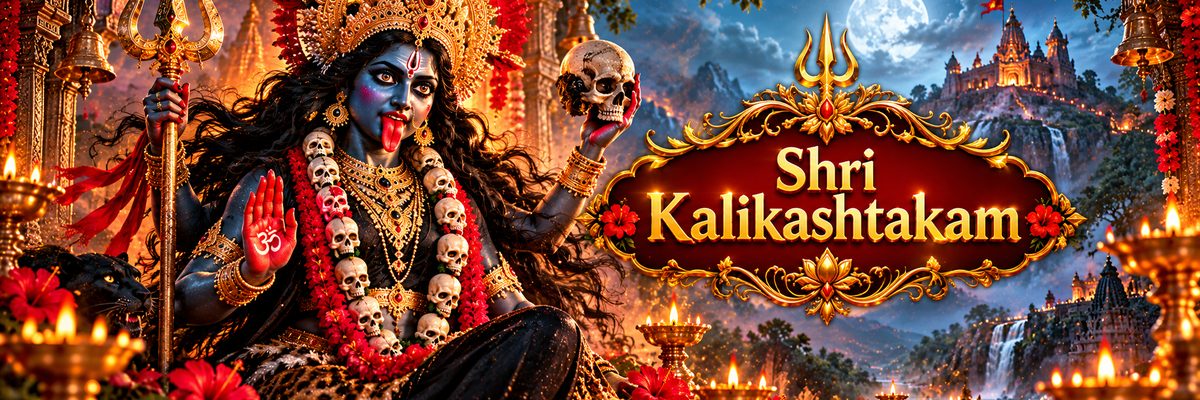
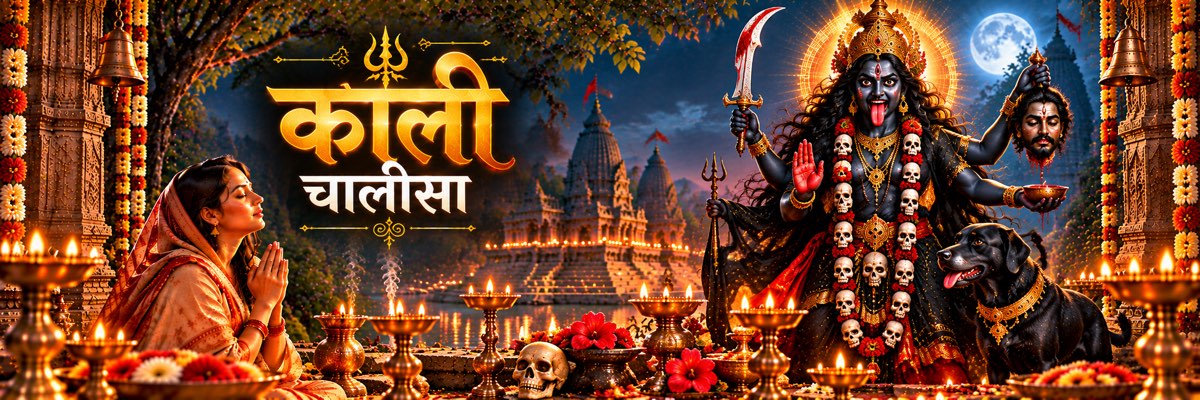
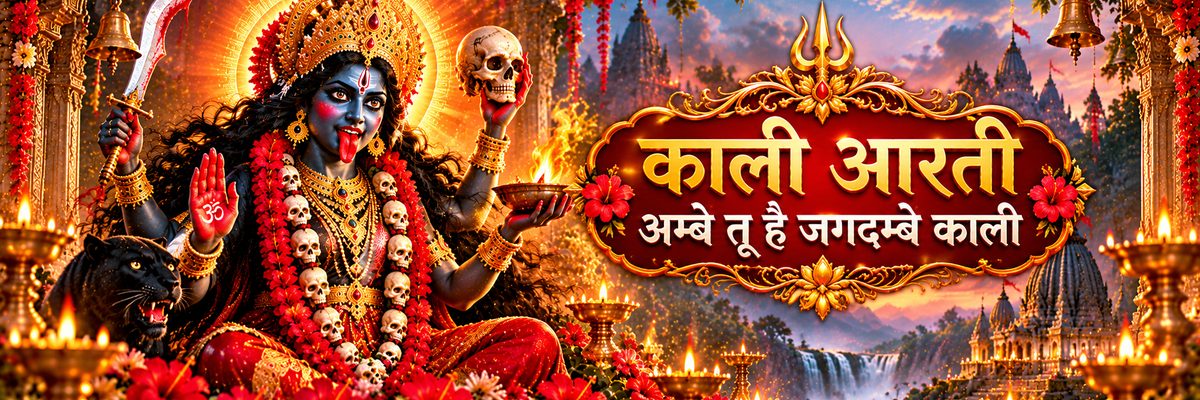
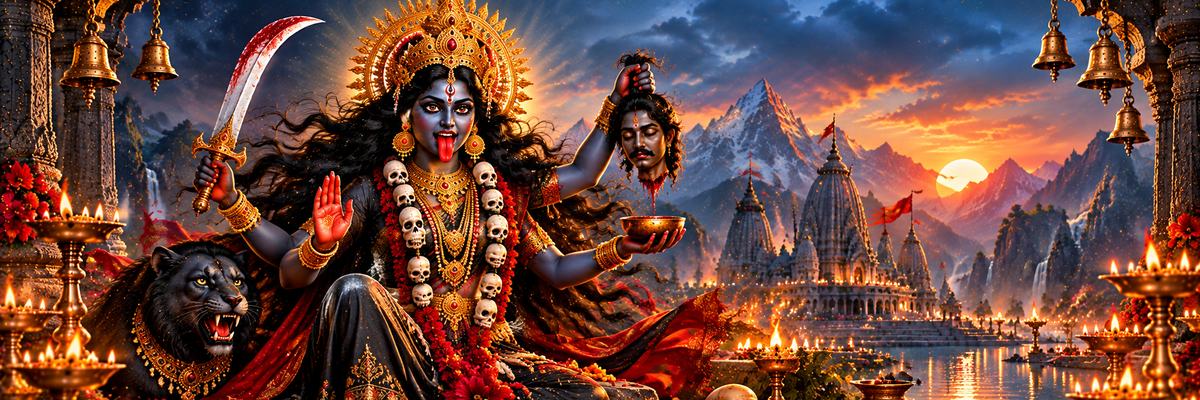
The form worshipped in most homes and in Bengal is Dakshina Kali. Every element has a meaning:
- Dark skin: the void from which everything comes and to which everything returns, beyond all colour and form.
- Four arms: a sword and a severed head in the left hands, for the destruction of ego and ignorance; the right hands grant fearlessness and boons to the devotee.
- Garland of heads, skirt of arms: the letters of the alphabet and the actions of the body, both surrendered to her.
- Shiva beneath her feet: Shiva lies still as pure consciousness, while she is its active power. Without Shakti, the tradition says, Shiva is shava, a corpse. A popular story adds that she stepped on him in the frenzy of battle and put out her tongue in embarrassment when she realised it.
The Kali of Bengal's saints
Kali is worshipped across India, but Bengal gave her a special tenderness. In the eighteenth century the poet Ramprasad Sen sang to her as a child sings to his mother, sometimes in complaint and sometimes in joy. His Shyama Sangeet is still sung today. In the nineteenth century Sri Ramakrishna Paramahamsa served as a priest of Bhavatarini Kali at the Dakshineswar temple near Kolkata. His experience of her as a living, loving Mother made her worship known across the world through his disciple Swami Vivekananda.
When she is worshipped
- Kali Puja (Shyama Puja): on the new moon of Kartik, the same night as Diwali's Lakshmi Puja, in Bengal, Assam and Odisha. The worship goes on through the night.
- Navratri: on the seventh night she is worshipped as Kalaratri, the darkest of the nine forms, who destroys fear.
- Amavasya, Tuesdays and Saturdays: the usual days for her chalisa and a lamp.
How to worship her at home
At home, worship Kali in the same calm, sattvik way as any form of the Mother: a picture, a mustard-oil or ghee lamp, red hibiscus (her favourite flower), incense, and a simple sweet. Read the Kali Chalisa, chant the Navarna mantra, whose goddess is Chamunda, and sing Jai Ambe Gauri. The tantric forms of her worship belong to initiation under a qualified guru and are not for household experiment. Her devotees say what she asks for most is surrender: give her your fear, and she takes it.
Temples
Kalighat in Kolkata is one of the Shakti Peethas, and its Kali, with her long golden tongue, is the image most Bengalis picture. Dakshineswar is Sri Ramakrishna's temple. Others include the Mahakali temple on Pavagadh hill in Gujarat, Gadhkalika in Ujjain, the Kalkaji temple in Delhi and the Bhadrakali temples of Kerala.