
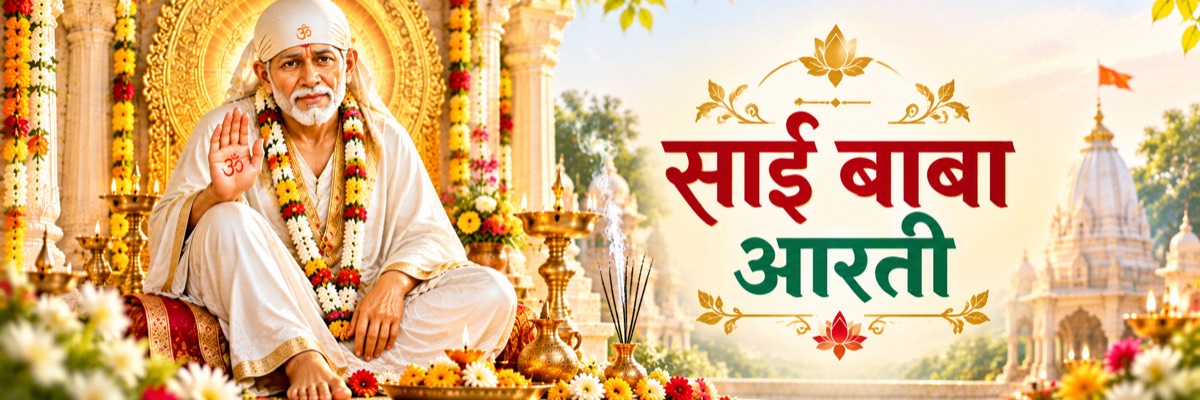
Original text
॥ श्री साईं बाबा आरती ॥ आरती श्री साईं गुरुवर की, परमानन्द सदा सुरवर की। जा की कृपा विपुल सुखकारी, दुःख शोक, संकट, भयहारी॥ आरती श्री साईं गुरुवर की, परमानन्द सदा सुरवर की। शिरडी में अवतार रचाया, चमत्कार से तत्व दिखाया। कितने भक्त चरण पर आये, वे सुख शान्ति चिरंतन पाये॥ आरती श्री साईं गुरुवर की, परमानन्द सदा सुरवर की। भाव धरै जो मन में जैसा, पावत अनुभव वो ही वैसा। गुरु की उदी लगावे तन को, समाधान लाभत उस मन को॥ आरती श्री साईं गुरुवर की, परमानन्द सदा सुरवर की। साईं नाम सदा जो गावे, सो फल जग में शाश्वत पावे। गुरुवासर करि पूजा-सेवा, उस पर कृपा करत गुरुदेवा॥ आरती श्री साईं गुरुवर की, परमानन्द सदा सुरवर की। राम, कृष्ण, हनुमान रुप में, दे दर्शन, जानत जो मन में। विविध धर्म के सेवक आते, दर्शन कर इच्छित फल पाते॥ आरती श्री साईं गुरुवर की, परमानन्द सदा सुरवर की। जै बोलो साईं बाबा की, जै बोलो अवधूत गुरु की। 'साईंदास' आरती को गावै, घर में बसि सुख, मंगल पावे॥ आरती श्री साईं गुरुवर की, परमानन्द सदा सुरवर की।
Transliteration
Shri Sai Baba Aarti Aarti Shri Sai Guruvar Ki, Paramanand Sada Survar Ki. Ja Ki Kripa Vipul Sukhkari, Dukh Shok, Sankat, Bhayhari. Aarti Shri Sai Guruvar Ki, Paramanand Sada Survar Ki. Shirdi Mein Avatar Rachaya, Chamatkar Se Tatva Dikhaya. Kitne Bhakt Charan Par Aaye, Ve Sukh Shanti Chirantan Paye. Aarti Shri Sai Guruvar Ki, Paramanand Sada Survar Ki. Bhav Dharai Jo Man Mein Jaisa, Pavat Anubhav Vo Hi Vaisa. Guru Ki Udi Lagave Tan Ko, Samadhan Labhat Us Man Ko. Aarti Shri Sai Guruvar Ki, Paramanand Sada Survar Ki. Sai Naam Sada Jo Gave, So Phal Jag Mein Shashvat Pave. Guruvasar Kari Puja-Seva, Us Par Kripa Karat Gurudeva. Aarti Shri Sai Guruvar Ki, Paramanand Sada Survar Ki. Ram, Krishna, Hanuman Roop Mein, De Darshan, Janat Jo Man Mein. Vividh Dharm Ke Sevak Aate, Darshan Kar Ichchhit Phal Paate. Aarti Shri Sai Guruvar Ki, Paramanand Sada Survar Ki. Jai Bolo Sai Baba Ki, Jai Bolo Avadhoot Guru Ki. 'Saidas' Aarti Ko Gavai, Ghar Mein Basi Sukh, Mangal Pave. Aarti Shri Sai Guruvar Ki, Paramanand Sada Survar Ki.
A Hindi aarti beside the Marathi ones
Sai Baba of Shirdi lived in a mosque he called Dwarkamai, in a small village in Ahmednagar district, and died there in 1918. The aarti that began in his own lifetime is in Marathi. Saibaba.org, the site of the Shirdi Sai Baba Sanstha in the USA, records that it was first offered to him at the Chavadi on 10 December 1910 by the devotee Bapusaheb Jog, and that temples and formal services still use the Marathi version. Shirdi's daily cycle of Kakad, Madhyan, Dhoop and Shej aartis is sung in Marathi too.
Aarti Shri Sai Guruvar Ki is something different: a short aarti in simple Hindi that lets devotees who don't know Marathi sing to Baba in their own language. It is the one most often heard in Sai mandirs across North India, in Thursday satsangs and in homes. Its last stanza is signed "Saidas", "servant of Sai". The sources don't identify the poet behind that name, so this page doesn't either.
What the six stanzas say
- The refrain calls Sai the best of gurus (guruvar) and the best of gods (survar), always in supreme bliss (paramanand). His abundant grace gives joy and takes away grief, sorrow, crisis and fear.
- Shirdi. "He took avatar in Shirdi and showed the truth through miracles." The many devotees who came to his feet found lasting peace.
- As you believe, so you receive. Bhav dharai jo man mein jaisa, pavat anubhav vo hi vaisa: what a devotee experiences matches the feeling they bring. The same stanza mentions udi, the ash from the dhuni (sacred fire) Baba kept burning at Dwarkamai, which he gave to visitors. Applying the guru's udi to the body brings samadhan, a mind at rest.
- Thursday. Whoever always sings Sai's name gains lasting fruit, and whoever worships and serves on Guruvasar, Thursday, the guru's day, receives the guru's grace. That one line is why Thursday is Sai Baba's day of worship.
- Many forms, many faiths. He gives darshan in the form of Ram, Krishna or Hanuman, knowing what is in the devotee's heart, and "servants of many religions come, take darshan and gain what they wished for". This is the aarti's version of the idea Baba is remembered for, sabka malik ek.
- The close. "Say victory to Sai Baba, say victory to the Avadhoot guru." An avadhoot is a renunciate beyond social rules and outward forms, which is how Baba lived. Whoever sings this aarti, says Saidas, finds happiness and well-being settling in the home.
How it is sung
At home, place Baba's picture or murti on a clean cloth and light a ghee lamp and incense. Many people also offer a little udi, flowers and a sweet (often khichdi or a simple prasad on Thursdays). Then sing the aarti with the lamp plate circling the picture. Morning and evening both work. In Sai mandirs the Hindi aarti is often sung by the congregation after the main service, or as the main aarti in temples whose devotees are mostly Hindi speakers. Many families follow it with the Sai Chalisa or with the guru mantra Gurur Brahma. Many Sai devotees also honour Dattatreya, the guru of gurus, whose Marathi Datta aarti by Sant Eknath is also on this site.
A note on the text
The text above follows Drik Panchang. The romanised text and translation on Hindupedia (by P. R. Ramachander) have the same six stanzas in the same order, with small gaps in transliteration ("Guru ki lagave" without the word udi, "bhakt charan par aaye" without kitne); the Hindi text here has both words. You will also find longer Sai aartis on recordings that add extra verses; those are separate compositions, not missing parts of this one.
Frequently asked questions
Is this the aarti sung at the Shirdi temple?
No. The Shirdi Samadhi Mandir's four daily aartis (Kakad at dawn, Madhyan at noon, Dhoop at sunset and Shej at night) are in Marathi. This Hindi aarti is sung mainly in homes and Sai temples outside Maharashtra.
Why is Thursday Sai Baba's day?
Thursday is Guruvar, the guru's day, and this aarti itself says that worship and service on Guruvasar win the guru's grace. Sai devotees treat Baba as their sadguru, so Thursday became his day for visits, fasts and aarti.
What is udi?
The ash from the dhuni, the fire Sai Baba kept burning at Dwarkamai in Shirdi, which he gave to visitors. Devotees still apply it to the forehead or take a pinch in water, as the third stanza describes.
Who is "Saidas" in the last stanza?
It is the poet's signature and simply means "servant of Sai". The available sources don't identify the person behind it.
Can people of any religion sing this aarti?
Yes. The aarti itself says that "servants of many religions" come to him, and Sai temples welcome everyone to the aarti.
When should I sing it, morning or evening?
Either. Many people sing it at the evening lamp every day and make a point of singing it on Thursdays and on Guru Purnima.
What does "Avadhoot guru" mean?
An avadhoot is a renunciate who has gone beyond the rules and outward signs of any one way of life. The word fits Baba, a fakir who lived in a mosque, kept a sacred fire and gave darshan to Hindus and Muslims alike.
Spotted a mistake?
If you find any grammatical, Hindi, English, mantra-text or other mistake on this page, tell us — we will correct it within 24 hours.