
Original text
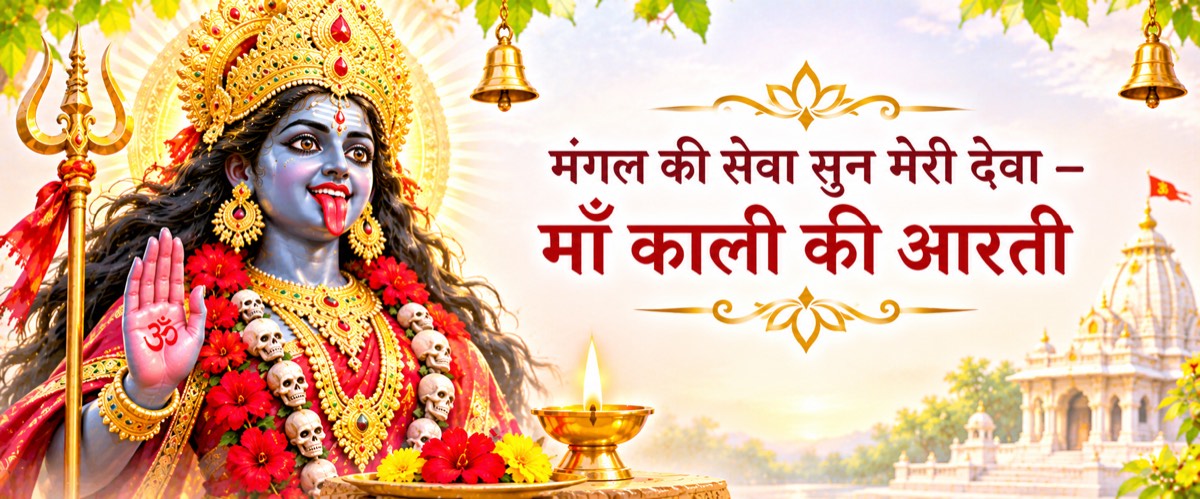
मंगल की सेवा सुन मेरी देवा, हाथ जोड तेरे द्वार खडे । पान सुपारी ध्वजा नारियल, ले ज्वाला तेरी भेट धरे ॥ सुन जगदम्बे न कर विलम्बे, संतन के भडांर भरे । संतन प्रतिपाली सदा खुशहाली, जय काली कल्याण करे ॥ बुद्धि विधाता तू जग माता, मेरा कारज सिद्व करे । चरण कमल का लिया आसरा, शरण तुम्हारी आन पडे ॥ जब-जब भीड पडी भक्तन पर, तब-तब आप सहाय करे । संतन प्रतिपाली सदा खुशाली, जय काली कल्याण करे ॥ गुरु के वार सकल जग मोहयो, तरुणी रूप अनूप धरे । माता होकर पुत्र खिलावे, कही भार्या भोग करे ॥ शुक्र सुखदाई सदा सहाई, संत खडे जयकार करे । सन्तन प्रतिपाली सदा खुशहाली, जै काली कल्याण करे ॥ ब्रह्मा विष्णु महेश फल लिये, भेट देन तेरे द्वार खडे । अटल सिहांसन बैठी मेरी माता, सिर सोने का छत्र फिरे ॥ वार शनिचर कुमकुम बरणो, जब लुंकड़ पर हुकुम करे । सन्तन प्रतिपाली सदा खुशाली, जै काली कल्याण करे ॥ खड्ग खप्पर त्रिशुल हाथ लिये, रक्त बीज को भस्म करे । शुम्भ-निशुम्भ को क्षण में मारे, महिषासुर को पकड दले ॥ आदित वारी आदि भवानी, जन अपने को कष्ट हरे । संतन प्रतिपाली सदा खुशहाली, जै काली कल्याण करे ॥ कुपित होकर दानव मारे, चण्ड-मुण्ड सब चूर करे । जब तुम देखी दया रूप हो, पल में सकंट दूर करे ॥ सौम्य स्वभाव धरयो मेरी माता, जन की अर्ज कबूल करे । सन्तन प्रतिपाली सदा खुशहाली, जै काली कल्याण करे ॥ सात बार की महिमा बणनी, सब गुण कौन बखान करे । सिंह पीठ पर चढी भवानी, अटल भवन में राज्य करे ॥ दर्शन पावे मंगल गावे, सिद्ध साधक तेरी भेट धरे । संतन प्रतिपाली सदा खुशहाली, जै काली कल्याण करे ॥ ब्रह्मा वेद पढे तेरे द्वारे, शिव शंकर हरी ध्यान धरे । इन्द्र कृष्ण तेरी करे आरती, चंवर कुबेर डुलाय रहे ॥ जय जननी जय मातु भवानी, अटल भवन में राज्य करे । संतन प्रतिपाली सदा खुशहाली, जय काली कल्याण करे ॥ मंगल की सेवा सुन मेरी देवा, हाथ जोड तेरे द्वार खडे । पान सुपारी ध्वजा नारियल, ले ज्वाला तेरी भेट धरे ॥
Transliteration
Mangal ki seva sun meri deva, haath jod tere dwar khade. Paan supari dhwaja nariyal, le jwala teri bhent dhare. Sun Jagdambe na kar vilambe, santan ke bhandar bhare. Santan pratipali sada khushhali, jai Kali kalyan kare. Buddhi vidhata tu jag mata, mera karaj siddh kare. Charan kamal ka liya aasra, sharan tumhari aan pade. Jab-jab bheed padi bhaktan par, tab-tab aap sahay kare. Santan pratipali sada khushhali, jai Kali kalyan kare. Guru ke vaar sakal jag mohyo, taruni roop anoop dhare. Mata hokar putra khilave, kahin bharya bhog kare. Shukra sukhdai sada sahai, sant khade jaikar kare. Santan pratipali sada khushhali, jai Kali kalyan kare. Brahma Vishnu Mahesh phal liye, bhent den tere dwar khade. Atal sinhasan baithi meri mata, sir sone ka chhatra phire. Vaar Shanichar kumkum barno, jab lunkad par hukum kare. Santan pratipali sada khushhali, jai Kali kalyan kare. Khadag khappar trishul haath liye, Raktabeej ko bhasm kare. Shumbh-Nishumbh ko kshan mein maare, Mahishasur ko pakad dale. Aadit vaari aadi Bhavani, jan apne ko kasht hare. Santan pratipali sada khushhali, jai Kali kalyan kare. Kupit hokar daanav maare, Chand-Mund sab choor kare. Jab tum dekhi daya roop ho, pal mein sankat door kare. Saumya swabhav dharyo meri mata, jan ki arj kabool kare. Santan pratipali sada khushhali, jai Kali kalyan kare. Saat baar ki mahima barni, sab gun kaun bakhan kare. Singh peeth par chadhi Bhavani, atal bhavan mein rajya kare. Darshan paave mangal gaave, siddh sadhak teri bhent dhare. Santan pratipali sada khushhali, jai Kali kalyan kare. Brahma Ved padhe tere dwaare, Shiv Shankar Hari dhyan dhare. Indra Krishna teri kare aarti, chanvar Kuber dulay rahe. Jai janani jai matu Bhavani, atal bhavan mein rajya kare. Santan pratipali sada khushhali, jai Kali kalyan kare. Mangal ki seva sun meri deva, haath jod tere dwar khade. Paan supari dhwaja nariyal, le jwala teri bhent dhare.
About this aarti
Mangal ki seva sun meri deva is the aarti most North Indian families sing for Maa Kali, and it is a fixture of Navratri jagrans and the Devi's chowki, where it is sung late at night after the bhajans. It is a folk aarti of the Devi tradition rather than a classical Sanskrit hymn, and that is part of its appeal: plain Hindi, a strong refrain, and images any devotee can picture.
The opening sets the scene. "Hear this auspicious service, O Devi: we stand at your door with folded hands, bringing paan, supari, a flag, a coconut and the flame as our offering." The refrain that follows almost every stanza, santan pratipali sada khushhali, jai Kali kalyan kare, sums up its faith: the Mother protects her devotees, keeps them happy, and does them good.
What the aarti says
- A prayer for help: the Devi is buddhi vidhata, the giver of understanding, and the mother of the world. "Whenever trouble has fallen on your devotees, you have come to their aid."
- The seven days: one of the aarti's distinctive features is that it names the weekdays one by one (guru ke vaar Thursday, Shukra Friday, Shanichar Saturday, Aadit Sunday, and so on) and praises a different aspect of the Devi on each. A later stanza says it outright: saat baar ki mahima barni, "I have sung the glory of the seven days; who can tell all your qualities?"
- The warrior: sword, skull-bowl and trident in her hands, she burns Raktabeej, kills Shumbha and Nishumbha in a moment, crushes Mahishasura, and grinds down Chanda and Munda, the battles of the Durga Saptashati.
- The gentle mother: "When you look with compassion, you remove trouble in a moment"; she takes on a saumya, gentle, nature and grants her devotees' requests.
- The court of the gods: Brahma reads the Vedas at her door, Shiva and Hari meditate on her, Indra and Krishna perform her aarti, and Kuber waves the chamar.
When it is sung
- Through both Navratris, at jagrans and Devi chowkis, and on Ashtami and Navami.
- On Kali Puja (Kartik Amavasya, the night of Diwali) and every Amavasya.
- On Tuesdays and Saturdays in Kali and Durga temples, often after Ambe Tu Hai Jagdambe Kali.
How to do the aarti
Light a ghee or mustard-oil lamp (or camphor), ring a bell, and wave the lamp clockwise before the Devi's image while the aarti is sung, then take the flame's warmth to your eyes and head. Offer red hibiscus, which is dear to Kali, and a sweet. For the full method, how many rounds and in what order, see how to do aarti the right way. Many follow it with the Kali Chalisa or the mantra Om Kreem Kalikayai Namah.
Frequently asked questions
Which goddess is "Mangal Ki Seva Sun Meri Deva" sung for?
Maa Kali. The refrain "jai Kali kalyan kare" names her, and it is sung in Kali and Durga temples and at Navratri jagrans.
Why does the aarti mention the days of the week?
It praises a different aspect of the Devi on each weekday, and says so in the line "saat baar ki mahima barni", "I have sung the glory of the seven days".
When is this aarti sung?
At Navratri, on Kali Puja (the night of Diwali), on Amavasya, and on Tuesdays and Saturdays, usually at the end of a jagran or chowki.
What does "santan pratipali" mean?
"Protector of the saints (devotees)": the Mother looks after those who worship her and keeps them happy.
Is this the same as "Ambe Tu Hai Jagdambe Kali"?
No. That is a separate Durga-Kali aarti. Many temples sing both, one after the other.
Spotted a mistake?
If you find any grammatical, Hindi, English, mantra-text or other mistake on this page, tell us — we will correct it within 24 hours.