At a glance
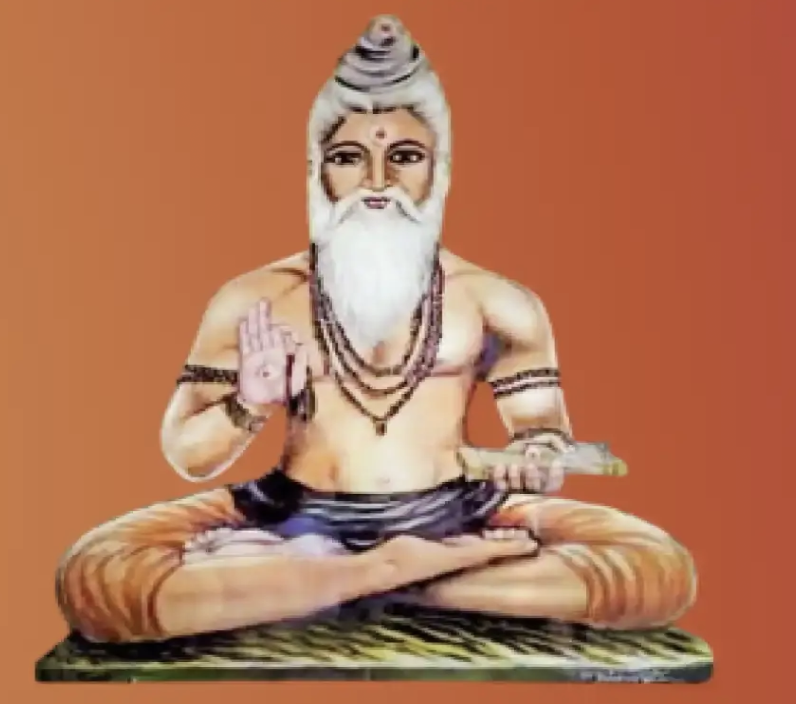
- Name & meaning: Dadhichi (दधीचि), in the Vedas Dadhyanch (दध्यङ्). The name is traditionally explained as “one who goes towards / delights in dadhi (curd)”.
- Other names: Dadhyanch Atharvana (“son of Atharvan”), Dadhicha.
- Category: Maharshi; a Vedic seer and a great devotee of Shiva in the Puranas.
- Father: The sage Atharvan (Bhagavata Purana and the Vedic epithet “Atharvana”). The Shiva Purana instead calls him a son of Chyavana of the Bhrigu line.
- Mother: Chitti, daughter of the sage Kardama (Bhagavata Purana). Some Hindi sources name her Shanti.
- Spouse: Suvarcha (Shiva Purana). The Brahma Purana’s Pippalada story names Pippalada’s mother Gabhastini, and some retellings call Dadhichi’s wife Lopamudra.
- Children: The sage Pippalada.
- Lineage: Atharvan line (Atharvana); the Dadhich brahmin community of Rajasthan regards itself as his descendants.
- Era: Named in the Rigveda, so the figure is very old; the Puranas place his sacrifice in an early age of the gods’ wars with the asuras. No historical date is possible.
- Ashram / places: Naimisharanya, especially Misrikh (Sitapur district, UP) with its Dadhichi Kund; local traditions also point to the Sabarmati bank in Ahmedabad and Dudheshwar.
- Major teachings: The madhu-vidya (“honey-knowledge”) of the Brihadaranyaka Upanishad, taught to the Ashvins.
- Best known for: Giving his bones for Indra’s vajra, the Hindu tradition’s great example of self-giving.
Birth and family background
Dadhichi is one of the few rishis who can be followed from the Rigveda right through to the Puranas, and his family details shift along the way. The Vedic texts simply call him Dadhyanch Atharvana, Dadhyanch the son (or descendant) of Atharvan, the fire-priest after whom the Atharvaveda is named. The Bhagavata Purana fills this out: Atharvan’s wife was Chitti, one of the daughters of Kardama, and Dadhichi was their son.
The Shiva Purana, telling the story of his son, instead says Dadhichi was born of Chyavana of the Bhrigu family. Both claims are presented here because both are traditional. Dadhichi’s own household comes up mainly in the story of his death and of his son Pippalada, told below.
Life and key episodes
The horse’s head and the honey-knowledge (Vedic)
The oldest story about him is strange and wonderful. Indra taught Dadhyanch a secret doctrine, the madhu-vidya, and threatened to cut off his head if he ever revealed it. The Ashvins, the twin physicians of the gods, wanted this knowledge. So they removed the sage’s head, kept it safe, and fitted him with a horse’s head, through which he taught them. When Indra struck off the horse’s head, the Ashvins put his own head back. The Rigveda alludes to this in hymns to the Ashvins. The Brihadaranyaka Upanishad (2.5.16–17) names Dadhyanch Atharvana as the one who taught the Ashvins the honey-doctrine “through a horse’s head”, and the Shatapatha Brahmana tells the story in full.
The bones that slew Vritra
The Rigveda already links Dadhichi’s bones with Indra’s victories:
इन्द्रो दधीचो अस्थभिर्वृत्राण्यप्रतिष्कुतः ।
जघान नवतीर्नव ॥ (Rigveda 1.84.13)
“With the bones of Dadhyanch, Indra, unopposed, struck down the Vritras, nine times ninety.” In the Vedic version, as the commentator Sayana explains it, these are the bones of the horse’s head, found in the lake Sharyanavat.
The Puranas turn this into the story most Hindus know. Tvashtar, grieving for his son Vishvarupa whom Indra had killed, raised the asura Vritra to destroy Indra, and no weapon of the gods could harm him. The gods were told, by Vishnu in the Devi Bhagavata and by Brahma in the Shiva Purana, that only a weapon made from the bones of the sage Dadhichi could do it. So they went to his ashram and asked for his life. He agreed. In one well-known version he first wished to bathe in all the sacred rivers, and the gods brought their waters together at Naimisharanya. Then he withdrew his life-breath by yoga. Vishvakarma shaped the vajra from his spine, and Indra killed Vritra with it.
The Brahma Purana gives a quieter version with a different reason. The gods had left their weapons with Dadhichi for safekeeping and did not return for a long time. Afraid that the weapons were losing their power, he dissolved their energy in water and drank it. When the gods came back, the only way to return their weapons was to give his own bones.
Dadhichi and King Kshuva
The Shiva and Linga Puranas tell of a quarrel between Dadhichi and his friend King Kshuva (Kshupa) over whether a brahmin’s learning or a king’s power is greater. The king struck him down with a vajra. Shukra, the preceptor, restored him and taught him the Mahamrityunjaya mantra. Through it Dadhichi pleased Shiva and received the boon of bones as hard as diamond, the boon that later made them fit for the vajra.
At Daksha’s sacrifice
In Puranic accounts of Daksha’s great yajna, Dadhichi is the sage who objects that Shiva has not been invited and walks out when Daksha refuses to listen. It is a small scene, but it fits the Shaiva devotion the Puranas give him.
Achievements and contributions
- A Vedic teacher: Through the madhu-vidya he is linked with one of the Upanishads’ central teachings, that all things are woven together in the one Self “like spokes in the hub of a wheel”.
- The ideal of self-giving: “Dadhichi-like” (dadhichi jaisa tyag) is still everyday Hindi for a sacrifice made wholly for others. His name is often invoked to encourage organ and body donation.
- A founder of lines: Through Pippalada his name reaches the Atharvaveda’s Paippalada tradition. The Dadhich community traces its origin to him, and folklore names his sister Dadhimati, whose temple stands in Nagaur district, Rajasthan.
- A national symbol: The Param Vir Chakra, India’s highest gallantry award, carries the image of Indra’s vajra and is widely described as honouring Dadhichi’s sacrifice.
Works and hymns connected with him
Dadhichi is remembered for what he taught and gave rather than for a text he wrote. The madhu-vidya in the Brihadaranyaka Upanishad is taught in his name. Tradition also credits him with the Hinglaj mantra: a folk story says he hid some Kshatriya children in the Hinglaj temple to protect them from Parashurama and composed the goddess’s protective incantation. Some sources connect him with the Narayana Kavacha, although in the Bhagavata Purana that armour-prayer is taught by Vishvarupa. These are traditional associations, not texts that can be securely traced to him.
Why he is revered today
- Dadhichi Jayanti falls on Bhadrapada Shukla Ashtami, around August–September, and is celebrated especially by the Dadhich community with puja, aarti and processions.
- Misrikh near Naimisharanya is a pilgrimage site. Its Dadhichi Kund is believed to be where the waters of all tirthas were gathered for his final bath. It is visited as part of the Naimisharanya parikrama.
- Katha-vachaks and teachers use his story to explain dana (giving), and it is retold often in Hindi textbooks and speeches.
Variant traditions and a historical note
There are three main layers. The Vedic Dadhyanch is a seer tied to the Ashvins and a horse’s head, and in the Rigveda Indra kills the Vritras with the bones of that head. The Puranic Dadhichi gives up his whole body, which is the story that has become the moral centre of his legend. Then there are local and community traditions: ashram sites, the Dadhimati temple, the Hinglaj mantra. His parentage (Atharvan and Chitti, or Chyavana), his wife’s name (Suvarcha, Gabhastini, Lopamudra) and the reason for the sacrifice (Vritra’s invincibility or the swallowed weapons) all vary by text. None of this can be dated historically. What stays the same across every version is the choice he makes.
Frequently asked questions
Why did Dadhichi give his bones?
Because the asura Vritra could not be killed with any existing weapon, and the gods were told that only a vajra made from Dadhichi’s bones would work. He gave up his body willingly for the sake of the world.
Who was Dadhichi’s son?
The sage Pippalada, known for the Prashna Upanishad, who was born after his father’s death and raised under a pipal tree.
Where was Dadhichi’s ashram?
Most traditions place it in Naimisharanya, at Misrikh in Sitapur district of Uttar Pradesh. Other local traditions name sites in Gujarat and elsewhere.