
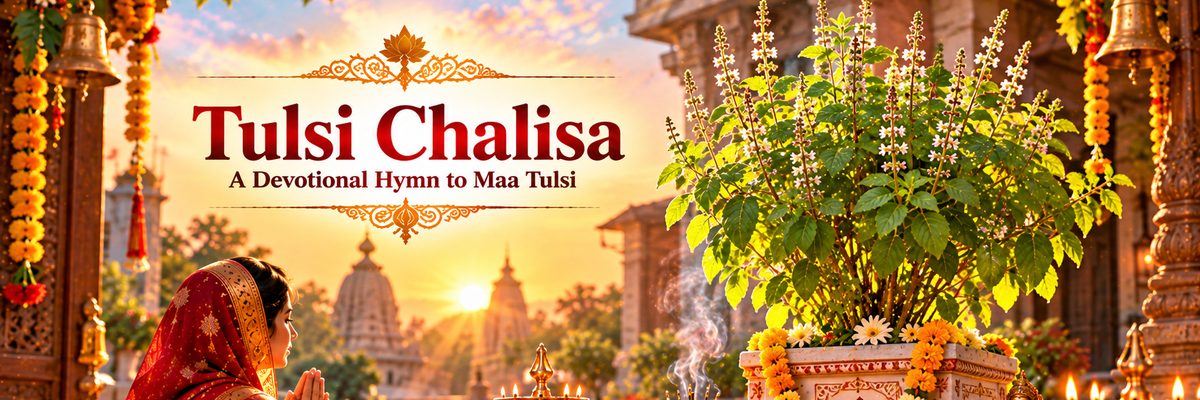
Original text
॥ दोहा ॥ जय जय तुलसी भगवती सत्यवती सुखदानी । नमो नमो हरि प्रेयसी श्री वृन्दा गुन खानी ॥ श्री हरि शीश बिरजिनी, देहु अमर वर अम्ब । जनहित हे वृन्दावनी अब न करहु विलम्ब ॥ ॥ चौपाई ॥ धन्य धन्य श्री तुलसी माता । महिमा अगम सदा श्रुति गाता ॥1॥ हरि के प्राणहु से तुम प्यारी । हरीहीँ हेतु कीन्हो तप भारी ॥2॥ जब प्रसन्न है दर्शन दीन्ह्यो । तब कर जोरी विनय उस कीन्ह्यो ॥3॥ हे भगवन्त कन्त मम होहू । दीन जानी जनि छाडाहू छोहु ॥4॥ सुनी लक्ष्मी तुलसी की बानी । दीन्हो श्राप कध पर आनी ॥5॥ उस अयोग्य वर मांगन हारी । होहू विटप तुम जड़ तनु धारी ॥6॥ सुनी तुलसी हीँ श्रप्यो तेहिं ठामा । करहु वास तुहू नीचन धामा ॥7॥ दियो वचन हरि तब तत्काला । सुनहु सुमुखी जनि होहू बिहाला ॥8॥ समय पाई व्हौ रौ पाती तोरा । पुजिहौ आस वचन सत मोरा ॥9॥ तब गोकुल मह गोप सुदामा । तासु भई तुलसी तू बामा ॥10॥ कृष्ण रास लीला के माही । राधे शक्यो प्रेम लखी नाही ॥11॥ दियो श्राप तुलसिह तत्काला । नर लोकही तुम जन्महु बाला ॥12॥ यो गोप वह दानव राजा । शङ्ख चुड नामक शिर ताजा ॥13॥ तुलसी भई तासु की नारी । परम सती गुण रूप अगारी ॥14॥ अस द्वै कल्प बीत जब गयऊ । कल्प तृतीय जन्म तब भयऊ ॥15॥ वृन्दा नाम भयो तुलसी को । असुर जलन्धर नाम पति को ॥16॥ करि अति द्वन्द अतुल बलधामा । लीन्हा शंकर से संग्राम ॥17॥ जब निज सैन्य सहित शिव हारे । मरही न तब हर हरिही पुकारे ॥18॥ पतिव्रता वृन्दा थी नारी । कोऊ न सके पतिहि संहारी ॥19॥ तब जलन्धर ही भेष बनाई । वृन्दा ढिग हरि पहुच्यो जाई ॥20॥ शिव हित लही करि कपट प्रसंगा । कियो सतीत्व धर्म तोही भंगा ॥21॥ भयो जलन्धर कर संहारा । सुनी उर शोक उपारा ॥22॥ तिही क्षण दियो कपट हरि टारी । लखी वृन्दा दुःख गिरा उचारी ॥23॥ जलन्धर जस हत्यो अभीता । सोई रावन तस हरिही सीता ॥24॥ अस प्रस्तर सम ह्रदय तुम्हारा । धर्म खण्डी मम पतिहि संहारा ॥25॥ यही कारण लही श्राप हमारा । होवे तनु पाषाण तुम्हारा ॥26॥ सुनी हरि तुरतहि वचन उचारे । दियो श्राप बिना विचारे ॥27॥ लख्यो न निज करतूती पति को । छलन चह्यो जब पारवती को ॥28॥ जड़मति तुहु अस हो जड़रूपा । जग मह तुलसी विटप अनूपा ॥29॥ धग्व रूप हम शालिग्रामा । नदी गण्डकी बीच ललामा ॥30॥ जो तुलसी दल हमही चढ़ इहैं । सब सुख भोगी परम पद पईहै ॥31॥ बिनु तुलसी हरि जलत शरीरा । अतिशय उठत शीश उर पीरा ॥32॥ जो तुलसी दल हरि शिर धारत । सो सहस्त्र घट अमृत डारत ॥33॥ तुलसी हरि मन रञ्जनी हारी । रोग दोष दुःख भंजनी हारी ॥34॥ प्रेम सहित हरि भजन निरन्तर । तुलसी राधा में नाही अन्तर ॥35॥ व्यन्जन हो छप्पनहु प्रकारा । बिनु तुलसी दल न हरीहि प्यारा ॥36॥ सकल तीर्थ तुलसी तरु छाही । लहत मुक्ति जन संशय नाही ॥37॥ कवि सुन्दर इक हरि गुण गावत । तुलसिहि निकट सहसगुण पावत ॥38॥ बसत निकट दुर्बासा धामा । जो प्रयास ते पूर्व ललामा ॥39॥ पाठ करहि जो नित नर नारी । होही सुख भाषहि त्रिपुरारी ॥40॥ ॥ दोहा ॥ तुलसी चालीसा पढ़ही तुलसी तरु ग्रह धारी । दीपदान करि पुत्र फल पावही बन्ध्यहु नारी ॥ सकल दुःख दरिद्र हरि हार ह्वै परम प्रसन्न । आशिय धन जन लड़हि ग्रह बसही पूर्णा अत्र ॥ लाही अभिमत फल जगत मह लाही पूर्ण सब काम । जेई दल अर्पही तुलसी तंह सहस बसही हरीराम ॥ तुलसी महिमा नाम लख तुलसी सूत सुखराम । मानस चालीस रच्यो जग महं तुलसीदास ॥
Transliteration
Doha: Jai Jai Tulsi Bhagavati Satyavati Sukhdani. Namo Namo Hari Preyasi Shri Vrinda Gun Khani. Shri Hari Sheesh Birajini, Dehu Amar Var Amb. Janhit He Vrindavani Ab Na Karahu Vilamb. Chaupai: 1. Dhanya Dhanya Shri Tulsi Mata, Mahima Agam Sada Shruti Gata. 2. Hari Ke Pranahu Se Tum Pyari, Harihin Hetu Kinho Tap Bhari. 3. Jab Prasanna Hai Darshan Dinhyo, Tab Kar Jori Vinay Us Kinhyo. 4. He Bhagavant Kant Mam Hohu, Deen Jani Jani Chhadahu Chhohu. 5. Suni Lakshmi Tulsi Ki Bani, Dinho Shraap Kadh Par Aani. 6. Us Ayogya Var Mangan Hari, Hohu Vitap Tum Jad Tanu Dhari. 7. Suni Tulsi Hin Shrapyo Tehin Thama, Karahu Vaas Tuhu Neechan Dhama. 8. Diyo Vachan Hari Tab Tatkala, Sunahu Sumukhi Jani Hohu Bihala. 9. Samay Pai Vhau Rau Paati Tora, Pujihau Aas Vachan Sat Mora. 10. Tab Gokul Mah Gop Sudama, Taasu Bhai Tulsi Tu Bama. 11. Krishna Raas Leela Ke Mahi, Radhe Shakyo Prem Lakhi Nahi. 12. Diyo Shraap Tulsih Tatkala, Nar Lokahi Tum Janmahu Bala. 13. Yo Gop Vah Danav Raja, Shankh Chud Namak Shir Taja. 14. Tulsi Bhai Taasu Ki Nari, Param Sati Gun Roop Agari. 15. As Dvai Kalp Beet Jab Gayau, Kalp Tritiya Janm Tab Bhayau. 16. Vrinda Naam Bhayo Tulsi Ko, Asur Jalandhar Naam Pati Ko. 17. Kari Ati Dvand Atul Baldhama, Linha Shankar Se Sangrama. 18. Jab Nij Sainya Sahit Shiv Haare, Marahi Na Tab Har Harihi Pukare. 19. Pativrata Vrinda Thi Nari, Kou Na Sake Patihi Sanhari. 20. Tab Jalandhar Hi Bhesh Banai, Vrinda Dhig Hari Pahuchyo Jai. 21. Shiv Hit Lahi Kari Kapat Prasanga, Kiyo Satitva Dharm Tohi Bhanga. 22. Bhayo Jalandhar Kar Sanhara, Suni Ur Shok Upara. 23. Tihi Kshan Diyo Kapat Hari Tari, Lakhi Vrinda Dukh Gira Uchari. 24. Jalandhar Jas Hatyo Abhita, Soi Ravan Tas Harihi Sita. 25. As Prastar Sam Hriday Tumhara, Dharm Khandi Mam Patihi Sanhara. 26. Yahi Karan Lahi Shraap Hamara, Hove Tanu Pashan Tumhara. 27. Suni Hari Turatahi Vachan Uchare, Diyo Shraap Bina Vichare. 28. Lakhyo Na Nij Kartooti Pati Ko, Chhalan Chahyo Jab Parvati Ko. 29. Jadmati Tuhu As Ho Jadroopa, Jag Mah Tulsi Vitap Anupa. 30. Dhagva Roop Ham Shaligrama, Nadi Gandaki Beech Lalama. 31. Jo Tulsi Dal Hamahi Chadhaihain, Sab Sukh Bhogi Param Pad Paihain. 32. Binu Tulsi Hari Jalat Sharira, Atishay Uthat Sheesh Ur Peera. 33. Jo Tulsi Dal Hari Shir Dharat, So Sahastra Ghat Amrit Darat. 34. Tulsi Hari Man Ranjani Hari, Rog Dosh Dukh Bhanjani Hari. 35. Prem Sahit Hari Bhajan Nirantar, Tulsi Radha Mein Nahi Antar. 36. Vyanjan Ho Chhappanahu Prakara, Binu Tulsi Dal Na Harihi Pyara. 37. Sakal Teerth Tulsi Taru Chhahi, Lahat Mukti Jan Sanshay Nahi. 38. Kavi Sundar Ik Hari Gun Gavat, Tulsihi Nikat Sahasgun Pavat. 39. Basat Nikat Durbasa Dhama, Jo Prayas Te Poorv Lalama. 40. Paath Karahi Jo Nit Nar Nari, Hohi Sukh Bhashahi Tripurari. Doha: Tulsi Chalisa Padhahi Tulsi Taru Grah Dhari. Deepdaan Kari Putra Phal Pavahi Bandhyahu Nari. Sakal Dukh Daridra Hari Haar Hvai Param Prasanna. Aashiy Dhan Jan Ladahi Grah Basahi Poorna Atra. Lahi Abhimat Phal Jagat Mah Lahi Poorn Sab Kaam. Jei Dal Arpahi Tulsi Tanh Sahas Basahi Hariram. Tulsi Mahima Naam Lakh Tulsi Soot Sukhram. Manas Chalis Rachyo Jag Mahan Tulsidas.
A plant with a life story
Most chalisas praise a deity. This one tells a biography. Its opening doha greets Tulsi as Bhagavati and Satyavati, as Hari's beloved (Hari preyasi), as Shri Vrinda, and as the one who sits on Hari's head. That last image is literal: a Tulsi leaf is placed on every offering to Vishnu. The forty chaupais then explain how a woman who loved Vishnu came to be a plant in a courtyard, through three lifetimes and a chain of curses. Much of this follows the Tulsi story told in the Brahmavaivarta Purana, and some of it also appears in the Padma and Shiva Puranas.
First life: a wish, and two curses
Tulsi does hard penance for Hari, who is dearer to her than her own life. When he appears, she asks him with folded hands: he Bhagavant, kant mam hohu, "Lord, be my husband" (chaupai 4). Lakshmi overhears. She tells Tulsi she has asked for an improper boon and curses her to become a tree with an unfeeling, wooden body (6). Tulsi curses her back on the spot: "you too shall dwell in lowly homes" (7). Hari calms Tulsi: "Fair one, do not despair. In time I will be your husband. Your hope will be fulfilled; my word is true."
Second life: Gokul and Shankhachuda
In the next age Tulsi is born in Gokul as the wife of the cowherd Sudama. During Krishna's rasa, Radha cannot bear to see Tulsi's love for him and curses her to be born among humans (11–12). The cowherd Sudama is reborn as the demon king Shankhachuda, and Tulsi becomes his wife again, "supremely chaste, a store of virtue and beauty" (13–14).
Third life: Vrinda and the Shaligram
In the third kalpa she is called Vrinda, and her husband is the asura Jalandhar (16). He fights Shiva himself, and Shiva cannot kill him, because Vrinda's chastity protects her husband. So Hari, to help Shiva, takes Jalandhar's form, goes to Vrinda and breaks her vow by deceit, and Jalandhar falls (20–22).
When Vrinda sees the trick, her curse carries far beyond this story: "As you killed Jalandhar by deceit, so Ravana will carry off Sita" (24). "Your heart is like stone, so let your body become stone" (25–26). Hari curses her in return, pointing out that her husband had himself tried to deceive Parvati (28). She will be the inert Tulsi tree, and he will be the Shaligram stone in the Gandaki river (29–30). The curses become the promise of a union. That is why a Shaligram is worshipped with Tulsi leaves, and why Tulsi Vivah marries the plant to Shaligram or Krishna every Kartik.
What the leaf means in worship
Chaupais 31 to 37 turn the story into rules every Vaishnava household knows:
- Whoever offers Tulsi leaves to the Shaligram enjoys every comfort and reaches the highest state (31).
- Without Tulsi, Hari's body burns and his head and heart ache (32).
- A Tulsi leaf placed on Hari's head is worth a thousand pots of nectar (33).
- Even fifty-six dishes are not dear to Hari without a Tulsi leaf (36), which is why a leaf goes on every bhog.
- "There is no difference between Tulsi and Radha" (35), and all tirthas rest in the shade of the Tulsi plant (37).
Who wrote it, and when it is read
Chaupais 38 and 39 sign the poem: "the poet Sundar", who lives near the dwelling of Durvasa. That is the same signature as the Ganga Chalisa's Sundardas of Kakra, the village of Durvasa's ashram. The closing doha mentions the names Sukhram and Tulsidas. It reads awkwardly in every version we checked, and there is no reason to connect it with Goswami Tulsidas of the Ramcharitmanas.
The chalisa is read every evening when a lamp is lit at the Tulsi plant, on Ekadashi, throughout the month of Kartik, and above all at Tulsi Vivah (Kartik Shukla Dwadashi in many regions, after Dev Uthani Ekadashi). The closing dohas promise that a woman who keeps a Tulsi plant at home, reads this chalisa and offers a lamp will be blessed with a son, and that Hari lives a thousandfold wherever Tulsi leaves are offered.
Spotted a mistake?
If you find any grammatical, Hindi, English, mantra-text or other mistake on this page, tell us — we will correct it within 24 hours.