
Maa Annapurna
Parvati as the goddess of food and nourishment, queen of Kashi, who once fed Shiva himself from her ladle and is remembered before every meal.
The goddess in the kitchen
Annapurna means "full of food" (anna, food or grain; purna, full). She is Parvati in the form that feeds the world, and she is the most domestic of goddesses: in many Hindu homes her small brass image, holding a ladle and a vessel of rice, sits in the kitchen rather than the puja room. The idea behind her is simple and serious. Food is not just fuel; it is a gift that passes through the goddess's hands, so it should be cooked cleanly, offered first, never wasted, and shared with anyone who comes hungry.
The story of Shiva's begging bowl
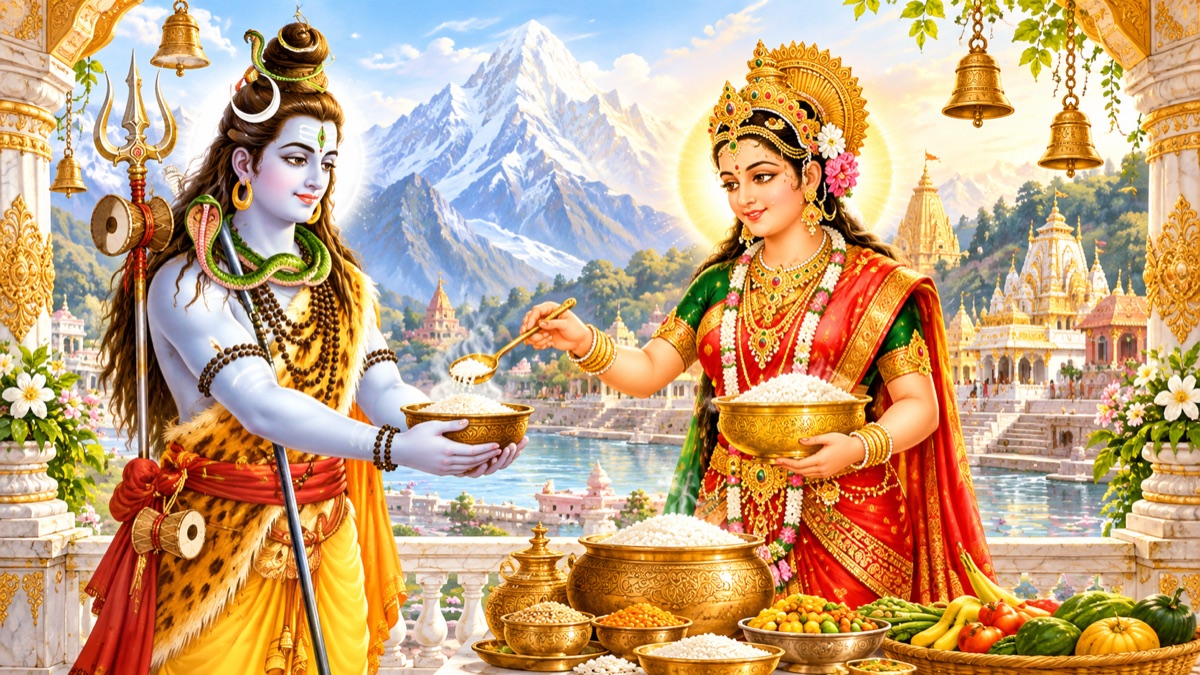
The best-known story about her is told in many versions. Shiva once told Parvati that the material world, food included, was only maya, illusion. To show him what that meant, she withdrew from the world, and with her went all nourishment. Crops failed and every creature, gods included, went hungry. Then she appeared in Kashi and opened a kitchen. Shiva himself came to her door as a beggar with his skull-bowl, and she fed him with her own ladle. Shiva understood that the body and its hunger are not illusions to be dismissed, and that spirit and matter belong together. This is why she is pictured giving alms to Shiva, and why the Annapurna Stotram ends every verse with bhiksham dehi, "give me alms". Its best-known verse asks her not for food alone but for jnana and vairagya, knowledge and detachment.
Queen of Kashi
In Varanasi she is Kashipuradhishwari, the queen of Kashi, and her temple stands a few steps from Kashi Vishwanath. The pairing is deliberate: Vishwanath gives liberation in Kashi, Annapurna makes sure no one there goes hungry while waiting for it. Pilgrims traditionally visit both. Her golden image in the temple is shown to devotees only for a few days each year around Dhanteras and Annakut, when prasad of grain is distributed. In 2021 an eighteenth-century Annapurna statue that had been taken from Varanasi a century earlier was returned from Canada and installed in the Kashi Vishwanath complex.
How she is pictured
She is fair, richly dressed and seated on a throne, holding a golden ladle (darvi) in one hand and a vessel full of rice or sweet payasa in the other. Sometimes the infant Shiva or the beggar Shiva stands before her with his bowl held out. Her other hands may show the gestures of granting boons and fearlessness.
When she is worshipped
- Annapurna Jayanti falls on Margashirsha Purnima, at the start of winter when the new harvest comes in.
- Annapurna Puja in Bengal is held on Chaitra Shukla Ashtami, during the spring Navratri.
- Many families remember her daily with a short prayer before eating, and the Gita's Brahmarpanam verse is recited before meals in the same spirit.
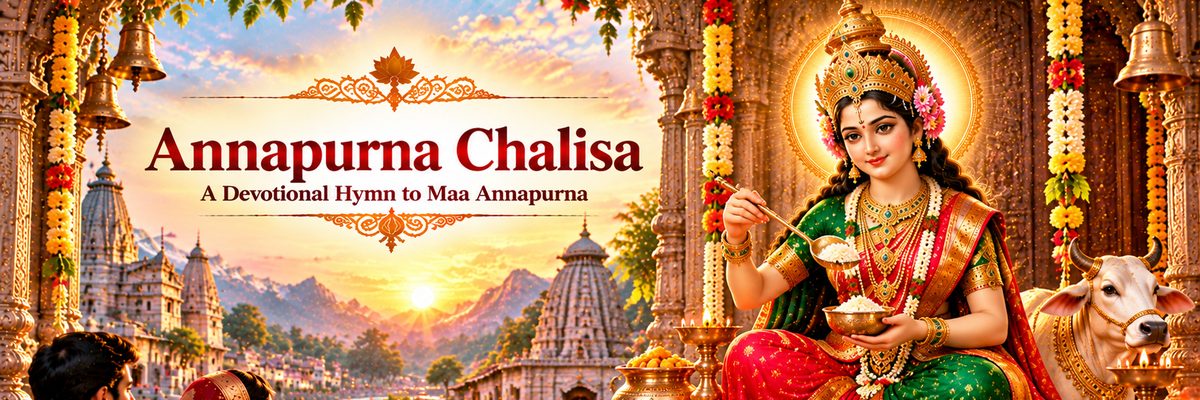
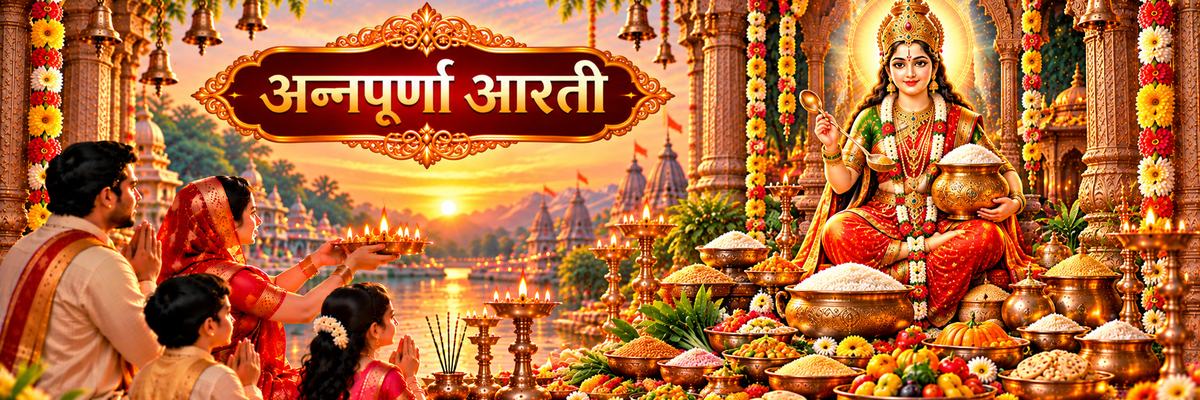
Her worship asks for very little: a clean kitchen, a lamp, rice, a few grains offered before the meal, and the habit of feeding someone else. The Annapurna Chalisa and the aarti Barambar Pranam are the usual hymns.
Mantra
Stotra
Chalisa
Aarti
Puja Vidhi
Spotted a mistake?
If you find any grammatical, Hindi, English, mantra-text or other mistake on this page, tell us — we will correct it within 24 hours.