
Kaal Bhairav
Shiva's fierce form, born of his anger, who cut off Brahma's fifth head and became the Kotwal of Kashi: the guardian worshipped on Kalashtami with a mustard-oil lamp and food for dogs.
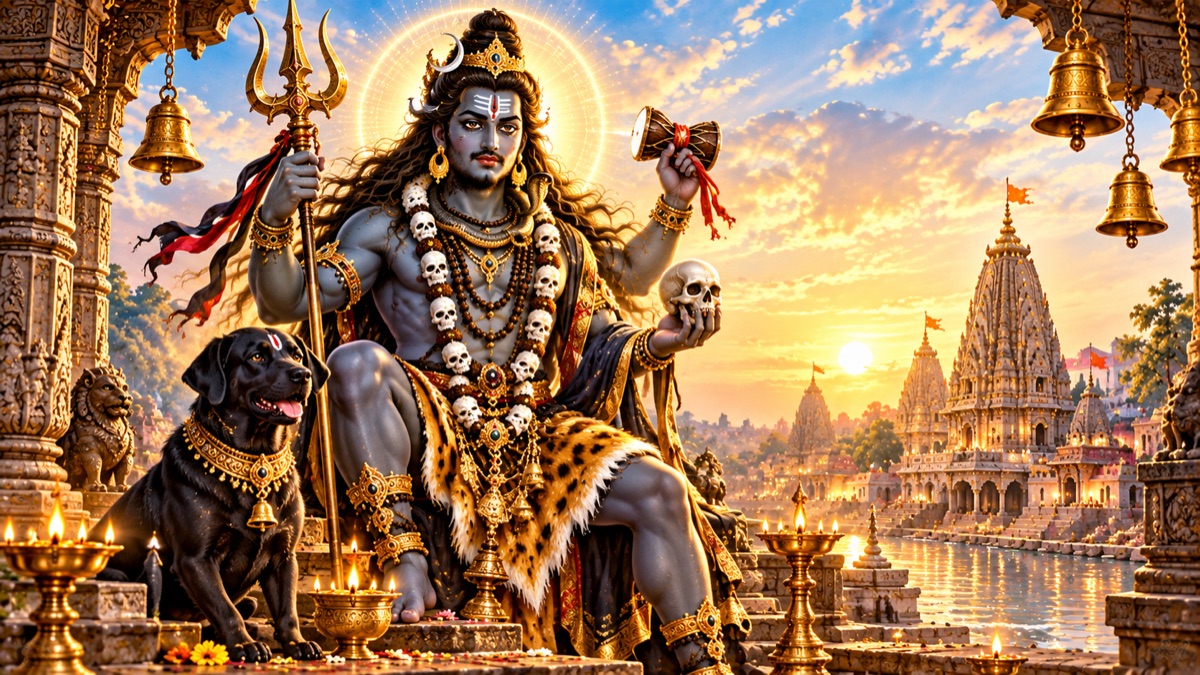
Shiva as the guardian
Bhairav, whose name means "the terrifying one", is the fierce form of Shiva. He is not a separate god so much as Shiva's protective anger given a body, and that is how he is worshipped: as a guardian. Almost every Shakti Peetha has a Bhairav shrine beside the goddess, and many temples place him at the gate. The pilgrimage to Vaishno Devi, for instance, is traditionally completed only after visiting the Bhairon Nath temple above the shrine. People go to him for protection from fear, enemies, black magic, accidents and legal trouble, and above all to overcome the fear of kaal, time and death. That is why his most famous form is Kaal Bhairav, "Bhairav who is master of time".
The fifth head of Brahma
The Shiva Purana tells how he appeared. Brahma, who once had five heads, claimed that he was the supreme creator and spoke to Shiva with contempt. From Shiva's anger Bhairav sprang out and, with the nail of his finger, cut off Brahma's fifth head. But killing even a part of Brahma was brahmahatya, the gravest sin, and the skull stuck to Bhairav's hand. He wandered the three worlds as a naked beggar with that skull as his begging bowl, pursued by the personified sin, until he entered Kashi. There the skull finally fell from his hand at the place now called Kapal Mochan, "release from the skull". Shiva then appointed him the Kotwal of Kashi, the city's police chief, who decides who may stay in Shiva's city. Pilgrims to Varanasi traditionally visit the Kaal Bhairav temple first, to ask his permission.
His form
He is dark, with fangs and a fierce smile, wearing a garland of skulls and snakes, carrying a trident, a damru, a noose and the skull-bowl. His mount is a dog, and feeding dogs, especially black ones, is one of the most common ways people honour him. The Bhairav Aarti names both: vahan shvan virajat kar trishul dhari. Alongside the fierce Kaal Bhairav, many families worship Batuk Bhairav, the child form, gentle and quick to please. Tantric tradition also counts eight Bhairavs, the Ashta Bhairav, one for each direction, among them Asitanga, Ruru, Chanda, Krodha, Unmatta, Kapala, Bhishana and Samhara.
Kashi, Ujjain and the offering of liquor
His two most famous temples are in Varanasi and Ujjain. At the Kaal Bhairav temple in Ujjain, liquor is offered to the deity as prasad and the priest pours it to his lips, a practice that comes from older tantric worship. It is a temple custom, not something to copy at home: household worship of Bhairav is sattvik, with mustard oil, black sesame, urad, flowers and sweets.
Kalashtami and Kaal Bhairav Jayanti
Every Krishna Paksha Ashtami, the eighth day of the waning moon, is Kalashtami, his monthly day. His appearance day, Kaal Bhairav Jayanti (Bhairav Ashtami), is the Kalashtami of Margashirsha. Devotees fast, light a four-wicked mustard-oil lamp at night, recite the Bhairav Chalisa and Adi Shankaracharya's Kalabhairava Ashtakam, and feed a dog. Many also worship him on Sundays and Tuesdays.
Mantra
Stotra
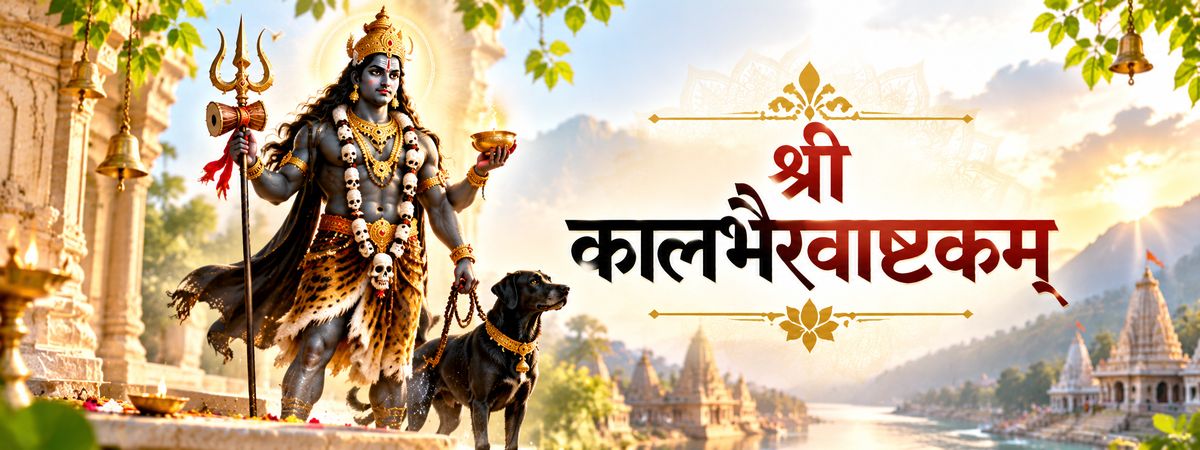
Chalisa
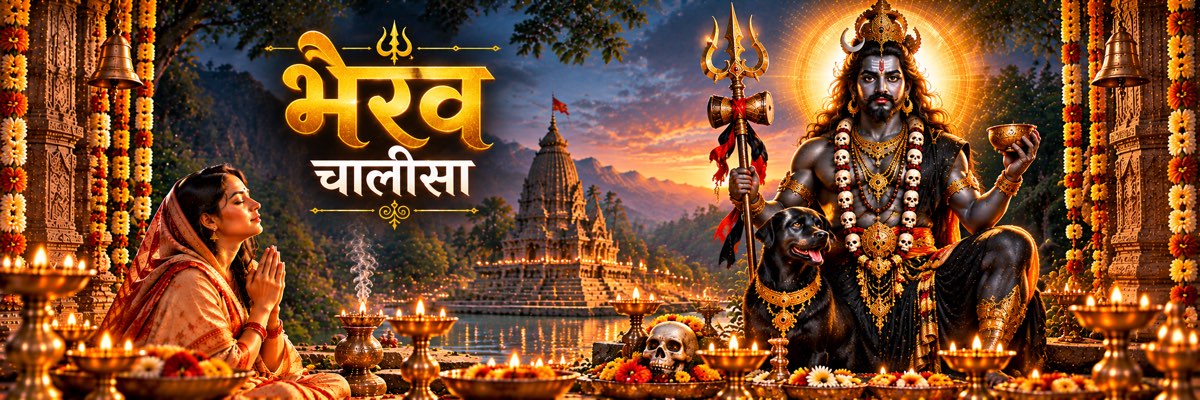
Aarti
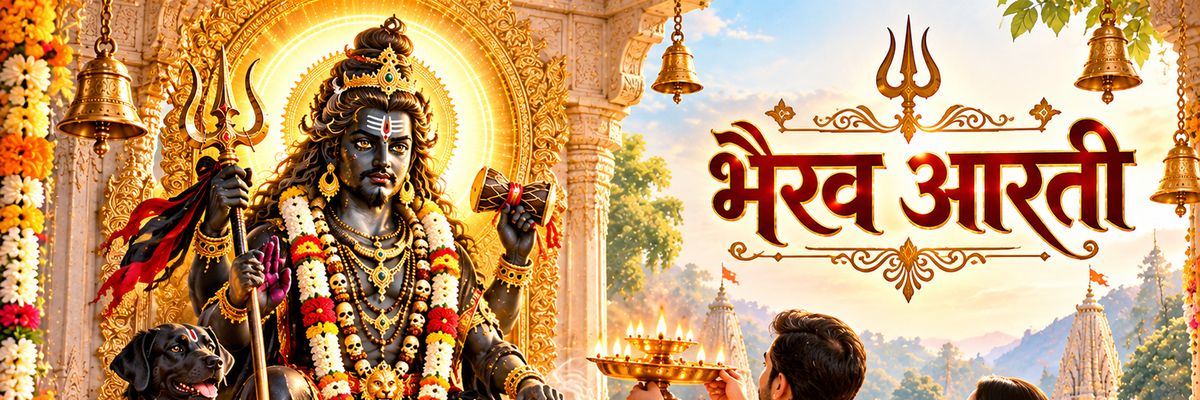
Vrat
Puja Vidhi
Spotted a mistake?
If you find any grammatical, Hindi, English, mantra-text or other mistake on this page, tell us — we will correct it within 24 hours.