
Central Sanskrit University, New Delhi
केन्द्रीय संस्कृत विश्वविद्यालय, नई दिल्ली
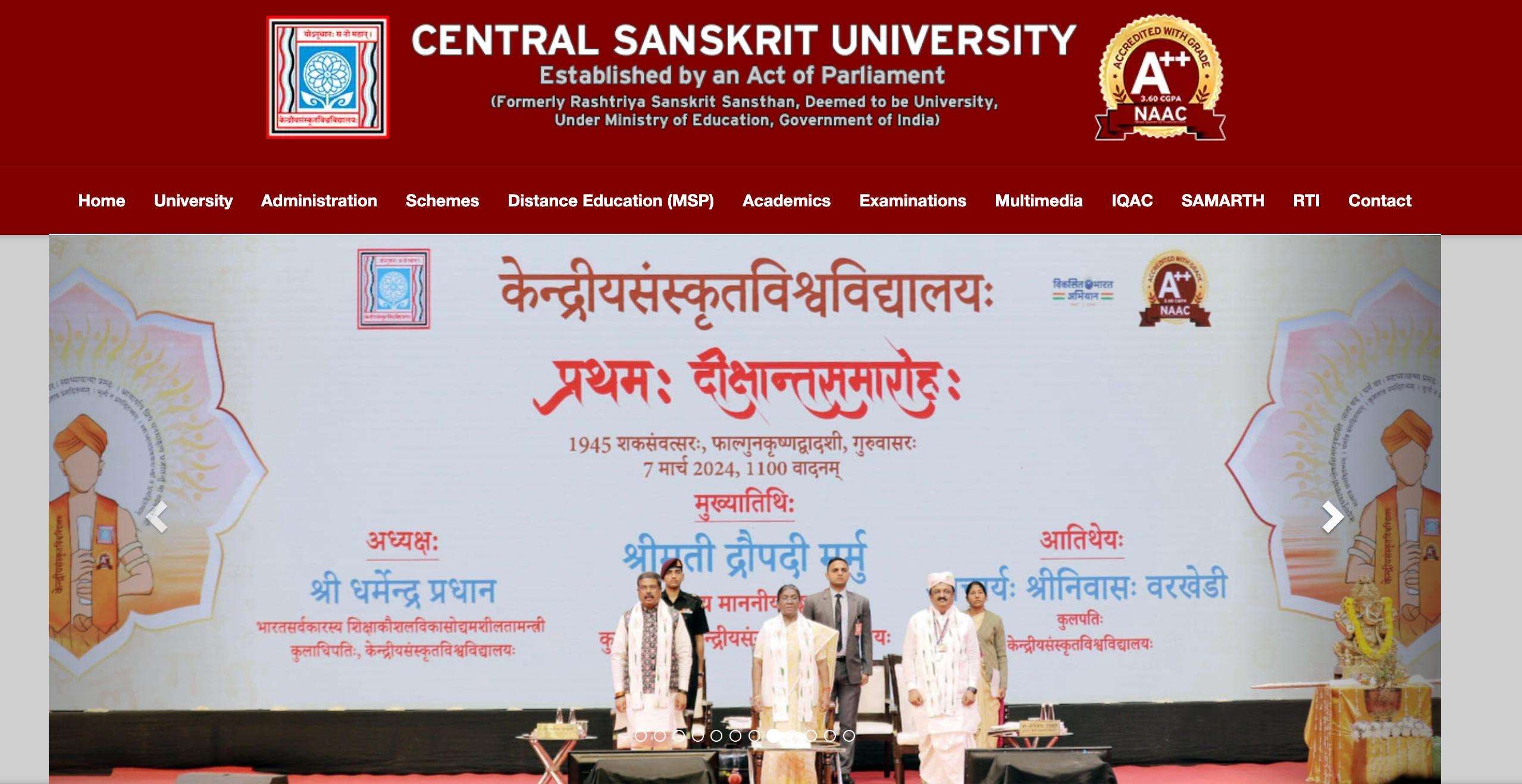
- Established
- 1970
- Type
- University
- Location
- New Delhi, Delhi
About
Describes itself as the largest, and the only multi-campus, language university in the world. It began as the Rashtriya Sanskrit Sansthan in 1970, became a Deemed University in 2002 and a Central University in 2020. Its campuses — from Jammu and Kangra to Puri, Sringeri and Guruvayoor — teach Sanskrit from school level through Shastri, Acharya and Vidyavaridhi (Ph.D.), in subjects including Sahitya, Vyakarana and Jyotish.
Courses & areas of study
- Prak Shastri (intermediate level) at campuses
- Shastri (equivalent to B.A.)
- Acharya (equivalent to M.A.)
- Vidyavaridhi (Ph.D.)
- Shiksha Shastri (B.Ed.)
- Subjects taught across campuses include Sahitya, Vyakarana, Jyotish and Jain Darshan
History
From the Sanskrit Commission to the Sansthan
Acting on the recommendations of the Sanskrit Commission (1956–57), the Government of India constituted a Central Sanskrit Board, which recommended a national institution for Sanskrit. The Rashtriya Sanskrit Sansthan was accordingly established on 15 October 1970 as an autonomous, fully government-funded society for developing and promoting Sanskrit in India and abroad.
A network of campuses
Over the following decades the Sansthan set up campuses across the country, teaching Sanskrit from Class 6 up to Shastri (graduation), Acharya (post-graduation) and Vidyavaridhi (Ph.D.). Two of them — the Lal Bahadur Shastri Kendriya Sanskrit Vidyapeetha in New Delhi and the Kendriya Sanskrit Vidyapeetha in Tirupati — grew into Deemed Universities of their own. In 2002 the Sansthan itself, with its constituent campuses, was declared a Deemed University.
Central University (2020)
On 16 March 2020 Parliament passed the Central Sanskrit Universities Act, 2020, under which the Sansthan and those two former campuses became Central Sanskrit Universities. Its campuses today are Shri Maharaja Ranbir Singh Campus (Jammu), Jaipur, Vedvyas Campus (Balahar, Kangra), Ekalavya Campus (Agartala), Shri Sadashiv Campus (Puri), Lucknow, Bhopal, Shri Raghunath Kirti Campus (Devaprayag), Ganganath Jha Campus (Prayagraj), Guruvayoor Campus (Thrissur), Rajiv Gandhi Campus (Sringeri) and Nashik.
How the campus network works
Central Sanskrit University is headquartered at Janakpuri in New Delhi, but almost all of its teaching happens at campuses spread across India — from Jammu and Kangra in the north to Sringeri and Guruvayoor in the south, and from Devprayag in the Himalaya to Agartala in the North-East. Many of these campuses began as older Sanskrit colleges and research institutes that the Rashtriya Sanskrit Sansthan took over and renamed, which is why their histories reach back far beyond 1970: the Ganganath Jha Research Institute in Prayagraj, the Sadashiva Sanskrit College in Puri, the Raghunath Sanskrit Mahavidyalaya in Jammu and the 1908 Mahavidyalaya at Devprayag among them.
Each campus has its own character — Kashmir Shaivism in Jammu, Jain philosophy in Bhopal and Jaipur, Pali and Buddhist philosophy in Lucknow, Sanskrit as the everyday medium at Sringeri — so students usually choose a campus for its subjects rather than its location alone. The university also runs distance-education centres for those who cannot study full time.
Frequently asked questions
Where is Central Sanskrit University's headquarters?
At 56-57 Institutional Area, Janakpuri, New Delhi.
When did it become a central university?
Under the Central Sanskrit Universities Act, 2020, passed by Parliament on 16 March 2020.
Can I study from school level?
Yes. Its campuses teach from Prak Shastri (intermediate level) through Shastri, Acharya and Vidyavaridhi (Ph.D.).
Does it offer distance education?
Yes, through distance-education study centres at several campuses.
Spotted a mistake?
If you find any grammatical, Hindi, English, mantra-text or other mistake on this page, tell us — we will correct it within 24 hours.